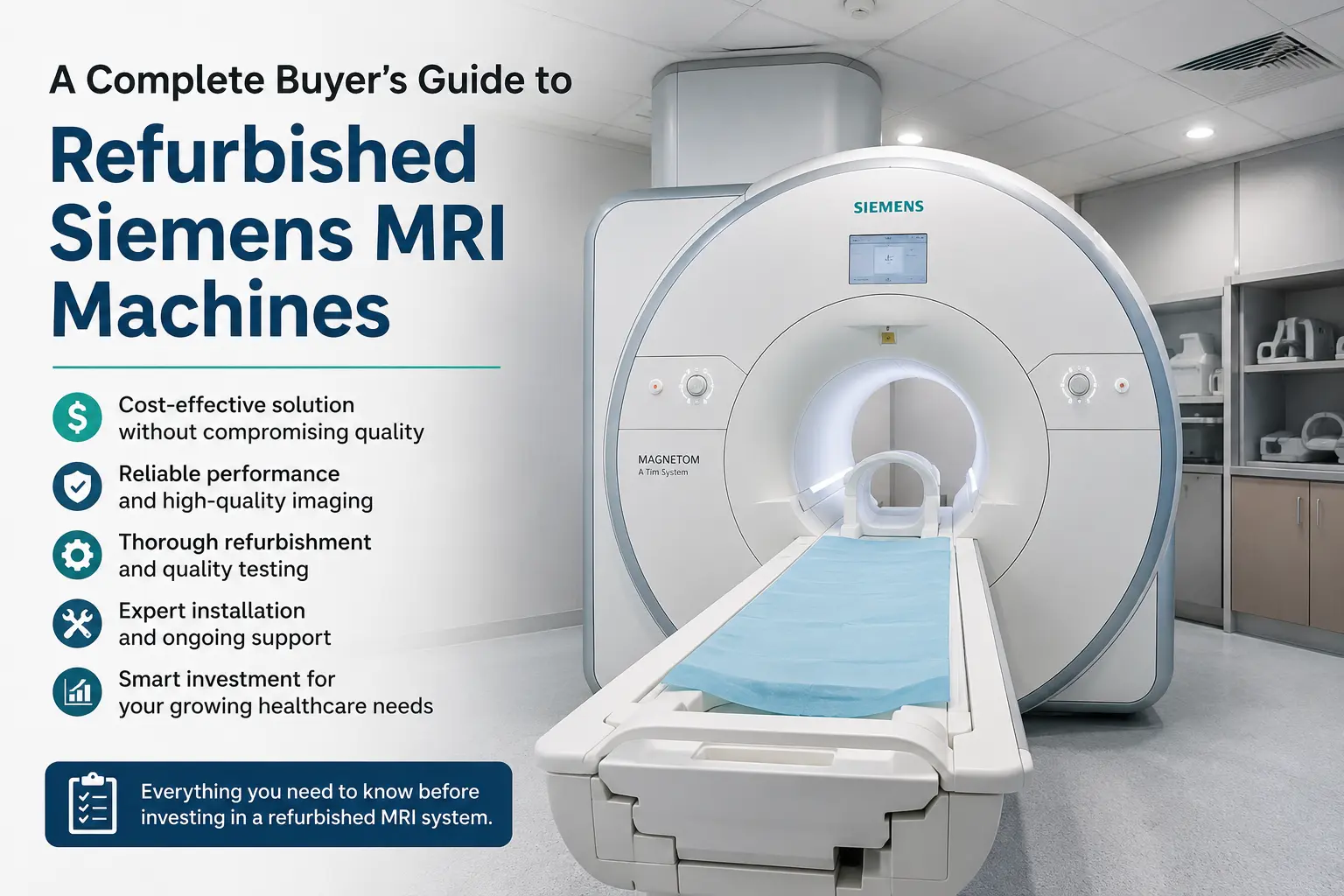
Buying an MRI machine is a major decision for any hospital or diagnostic centre. While new systems offer the latest technology, their high cost can make them difficult to justify, especially for growing facilities or businesses working with a limited budget.
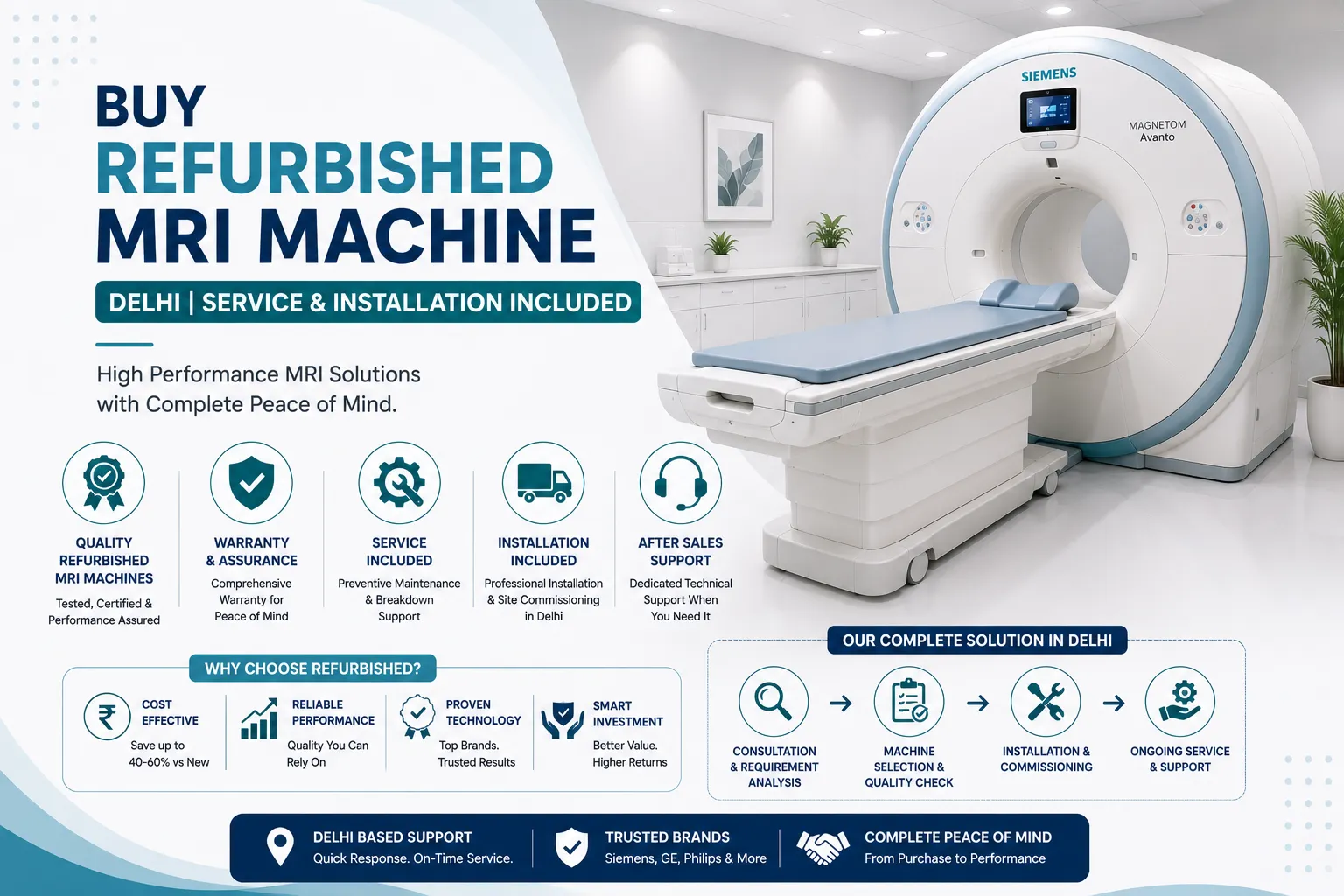
This is why many healthcare providers are turning to refurbished MRI systems. A properly refurbished Siemens MRI machine can deliver reliable performance, high-quality imaging, and years of service at a much lower investment than a new system. Popular refurbished Siemens MRI models include the Magnetom Essenza, Avanto, and Verio. Each system is designed for different clinical requirements, budgets, and patient volumes.
But not every refurbished MRI machine offers the same value. The quality of refurbishment, system condition, installation support, warranty coverage, and long-term maintenance all play an important role in your purchasing decision.
If you're planning to invest in one, this guide will help you understand what to look for, what questions to ask, and how to choose the right system for your facility.
Why More Healthcare Facilities Are Choosing Refurbished MRI Systems
The demand for diagnostic imaging continues to grow, but healthcare budgets don't always grow at the same pace.
For many hospitals and diagnostic centres, purchasing a brand-new MRI system isn't the only option. Refurbished equipment allows facilities to expand imaging services, replace ageing systems, or open new locations without making a massive capital investment.
The biggest advantage is value. Instead of paying a premium for a new machine, you can invest in a system that still delivers reliable performance while freeing up budget for staffing, infrastructure, or other equipment needs.
This approach has become increasingly common among private hospitals, diagnostic chains, and independent imaging centres.
What Does a Refurbished MRI Machine Mean?
Many buyers assume "refurbished" simply means used. That's not the case.
A professionally refurbished MRI system goes through a detailed restoration process before it is offered for sale. The goal is to ensure the equipment performs reliably and meets operational standards.
Depending on the supplier, refurbishment may include:
Complete system inspection
Replacement of worn components
Software updates
System calibration
Cosmetic restoration
Quality testing
Safety verification
The quality of this process often determines how well the system performs after installation. That's why the supplier you choose is just as important as the machine itself.
Why Siemens Remains a Preferred Choice
Siemens has built a strong reputation in the imaging industry over several decades. Many healthcare providers continue to choose Siemens systems because of their reliability, imaging quality, and long operational life.
Another advantage is the large installed base of Siemens equipment worldwide. This often makes technical support, service expertise, and replacement parts easier to access.
Popular Siemens MRI platforms are also known for maintaining their clinical value long after their initial installation, making them strong candidates for refurbishment.
This is one reason why demand for Refurbished Siemens MRI Machines continues to grow across hospitals and diagnostic centres.
Start by Understanding Your Clinical Requirements
Before looking at models or pricing, define what your facility actually needs.
Many buyers make the mistake of focusing on specifications before understanding their clinical workload.
Ask yourself:
What examinations will be performed most often?
How many patients do you expect to scan each day?
Do you require advanced applications?
Will you serve neurological, orthopaedic, cardiac, or general imaging patients?
Are you planning future expansion?
The answers help determine which MRI system makes the most sense for your facility.
Buying a system with capabilities you never use increases costs without adding value.
Choosing the Right Magnet Strength
One of the most important decisions is selecting the appropriate magnet strength.
1.5 Tesla MRI Systems
A 1.5 Tesla MRI remains one of the most widely used imaging platforms in the world.
These systems offer:
Excellent diagnostic capability
Broad clinical applications
Established imaging protocols
Lower operating costs compared to higher-field systems
For many hospitals and diagnostic centres, a 1.5T MRI provides everything needed for daily operations.
3 Tesla MRI Systems
A 3 Tesla MRI system offers higher image resolution and additional capabilities for specialised imaging.
These systems are often chosen for:
Advanced neurological studies
Research facilities
High-end imaging centres
Specialised clinical applications
However, they generally require a larger investment and additional infrastructure planning.
The right choice depends on your patient volume, clinical requirements, and budget.
Evaluate the Refurbishment Process Carefully
Not all refurbishment providers follow the same standards.
Some suppliers perform comprehensive restoration, while others focus only on basic repairs.
Before making a purchase, ask detailed questions about:
Component replacement procedures
System testing methods
Software upgrades
Quality control processes
Final performance verification
A trustworthy supplier should be transparent about the work completed on the system.
If documentation is unavailable or unclear, consider it a warning sign.
Don't Ignore Installation Requirements
Many buyers focus entirely on the equipment and overlook installation planning.
MRI installation involves far more than delivering a machine to a facility.
Several factors must be evaluated beforehand:
Room Size and Accessibility: The MRI room must accommodate both the equipment and patient workflow requirements.
Structural Support: MRI systems are extremely heavy and require proper floor loading capacity.
Electrical Infrastructure: The facility must meet power requirements for stable operation.
Cooling Systems: Environmental controls play an important role in maintaining system performance.
Shielding Requirements: Proper shielding ensures safety and minimizes interference.
Planning these factors early can prevent delays and unexpected costs during installation.
Consider Long-Term Service Support
An MRI machine is a long-term investment. Even the best system will eventually require maintenance and technical support.
When evaluating suppliers, ask about:
Preventive maintenance programs
Service response times
Availability of trained engineers
Spare parts support
Remote troubleshooting capabilities
Annual maintenance contracts
Reliable support helps reduce downtime and keeps patient schedules running smoothly.
A lower purchase price often means very little if service support is unavailable when you need it.
Understand the Total Cost of Ownership
Many buyers focus only on the purchase price. In reality, the cost of owning an MRI system extends far beyond the initial investment.
Additional costs may include:
Installation
Site preparation
Staff training
Service contracts
Replacement components
System upgrades
Operational expenses
Looking at the complete financial picture helps avoid surprises later.
The cheapest option is not always the most cost-effective option.
Ask About Warranty Coverage
A warranty provides confidence in both the equipment and the supplier.
Before signing any agreement, review:
Warranty duration
Covered components
Service terms
Exclusions
Labour coverage
Emergency support options
Clear warranty terms help protect your investment and reduce uncertainty during the first years of operation.
Staff Training Should Not Be Overlooked
Even the most advanced MRI system delivers limited value if staff members are not comfortable using it.
Training should be part of the overall purchasing process.
Proper training helps staff:
Operate the system efficiently
Follow safety protocols
Improve workflow
Reduce operational errors
Handle basic troubleshooting
Well-trained teams often achieve better productivity and patient throughput.
Questions to Ask Before You Buy
Before finalising your purchase, ask your supplier:
How old is the system?
What refurbishment work was completed?
Can you provide testing documentation?
What warranty options are available?
How quickly can service engineers respond?
Are installation services included?
What future upgrade options exist?
Can you provide customer references?
The answers will tell you a lot about both the equipment and the company selling it.
Choosing the Right Supplier Matters
A refurbished MRI purchase is more than a transaction. You're choosing a long-term service partner.
Look for a supplier that offers:
Transparent communication
Proven technical expertise
Installation support
Ongoing maintenance services
Training assistance
Reliable after-sales support
The right partner can help ensure your MRI system continues to deliver value for years.
Final Thoughts
A refurbished Siemens MRI system can be a smart investment for hospitals and diagnostic centres looking to expand imaging capabilities without the high cost of new equipment.
The key is to look beyond the purchase price. Understanding your clinical needs, evaluating the refurbishment process, reviewing service support, and choosing the right supplier all contribute to a successful investment.
When selected carefully, Refurbished Siemens MRI Machines can provide dependable performance, quality imaging, and long-term value while helping healthcare facilities meet growing patient demands.