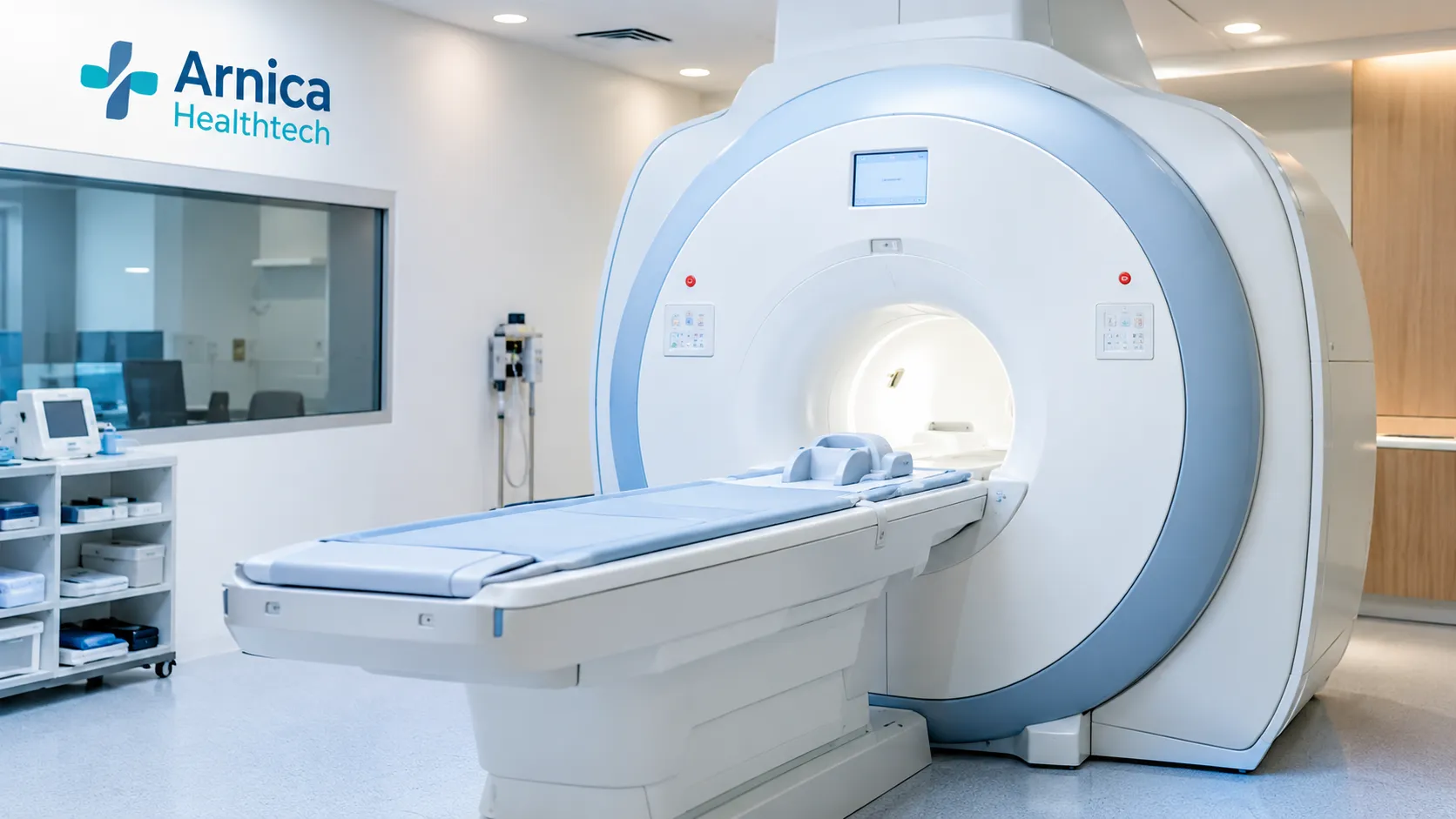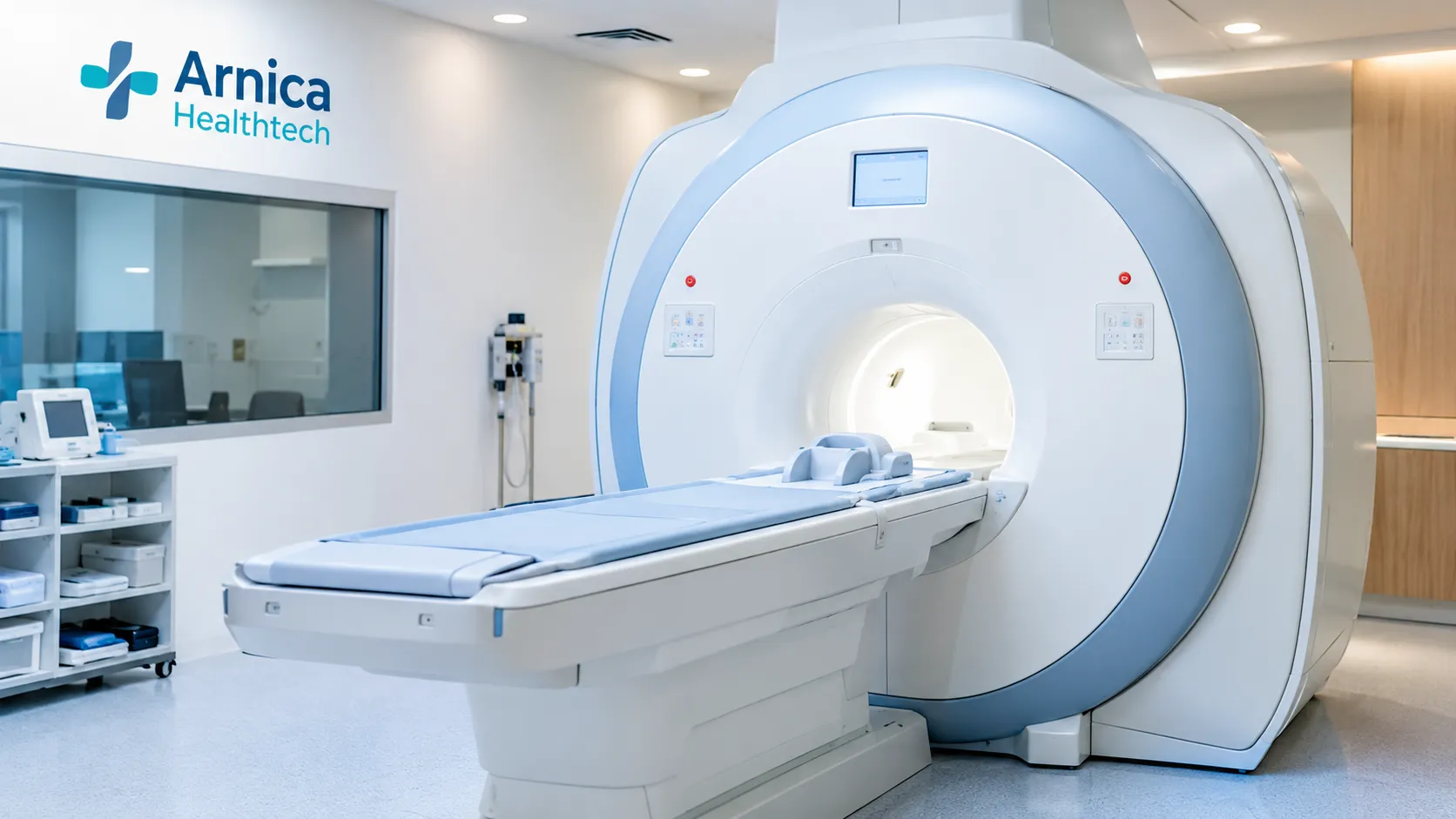
The field strength of the MRI system is important, but it’s usually the last consideration. This guide takes a different approach. It provides information about the important questions that are often asked after the system is purchased. It decodes the jargon and describes the common pitfalls during the purchase process.
Selecting an MRI Machine in Delhi Requires Understanding Your Scans Rather Than MRI Machine Specs
An MRI machine is a tool. With different tools, different jobs are done. Let's look at a few.
A clinic that specializes in sports injuries and/or orthopedic injuries and ailments will have a good number of shoulder and knee studies. They will need to provide patient comfort. In and out time may be of greater importance. Brain studies may not be of great concern.
A diagnostics center will have a combination of brain, spine, and joint studies and will have to cover the entire body. Coil flexibility will be of great importance.
A multi-specialty hospital with an active neurology and oncology center will have a combination of brain studies and will require higher field strengths.
Write out the 10 studies that you conduct the most. Describe your patient base, how many are children or senior citizens, how many are obese, how many are claustrophobic, etc. With this information, ask each supplier how their machine addresses these studies. This exercise will give you the information you need to differentiate between the suppliers.
Field Strength in Plain Language
Field strength is measured in tesla (T). It describes the strength of the magnet, and it influences signal, scan time and the type of system you end up with.
| Field strength | Typical setup | Where it tends to fit |
|---|---|---|
| Around 0.2T to 0.5T | Often a permanent magnet with an open design | Joint and spine work, patient comfort, lighter site demands |
| 1.5T | Usually a superconducting, closed-bore magnet | General hospital and diagnostic centre work across many body regions |
| 3T | Superconducting, closed bore | Advanced neuro and specialised protocols, with heavier planning and site requirements |
Generally, the higher the field strength, the stronger the signal, and the faster and more finely detailed the MRI scans. However, field strength is just one consideration when assessing the appropriateness of MRI scanners. A low field strength scanner would be appropriate for the needs of a joint and spine clinic, while a facility focusing on neuro work would find a high field strength scanner appropriate. A magnet can always be complemented by other considerations.
Open MRI Machine: When It Is the Right Call
Unlike traditional MRI machines, which are long and skinny with a narrow, claustrophobic tunnel, an open MRI doesn’t close in on a patient. This design can ease the anxiety of patients of all sizes and can give smaller patients the convenience of having a caregiver in the MRI room with them. From a business perspective, focus groups have shown parents preferring open MRI machines for their children. The only downside to this style of machine is that, like other MRI machines, it requires a large and expensive magnet. The type used in open MRI machines don’t require liquid helium to operate, so that reduces the cost of upkeep.
Because of the type of magnet and coils used in the machine, images produced by an Open MRI Machine are typically less clear and of lower quality when compared to traditional MRI machines.
Some of the open MRI machines that are used in India are Hitachi Aperto Lucent and Hitachi Airis Vento, which are 0.4 T and 0.3 T open MRI machines. For additional information on open MRI machines in India, please visit our web page Open MRI Machines in Delhi.
The Room Is Half the Machine
Customers generally focus on the magnets, and do not consider the space that needs to be accommodated for their support. Therefore, it is always prudent to request for a site survey as early as possible in the project, and it will cover the following:
- Finishing Shielding, to eliminate unwanted RF signals from outside the lab that may affect the quality of the images produced
- Fringe Magnetic Fields, to determine the safe operating limits of the magnetic field surrounding the scanner
- The path and capacity of the power and cooling (chilled-water) Cables
- Floor loading
- The complete route (in the ceiling and through the walls), and the dimensions of doorways and other constraints along the path from the main entrance of the hospital to the scanner location
- He-Cooled superconducting magnets, and Quench Venting arrangements
- Access control to ensure that the magnet is screened in a similar fashion to x-ray equipment. The ACR’s Four-Zone model is an accepted means to describe this.
You do not want to discover that the service elevator is too small to accommodate your new magnet on delivery day. The first site visit is the best way to ensure the magnet will fit in your facility.
Planning for Delhi Conditions
MRI installation entails a lot of considerations beyond what is documented. There are various constraints when selecting the actual location in the suite by which the MRI equipment is delivered. The delivery route and the size of the equipment must be taken into consideration when selecting the location of installation.
Heat is best absorbed by a cooling system by assessing the limits of the system and its equipment. MRI equipment is sensitive and can easily be damaged by power failure. Discuss with the engineers about what can be done to alleviate these risks.
Some MRI equipment requires a special permit based on the type of MRI service provided. Make sure your permits are in order by discussing with your consultants.
Refurbished or New: Questions Worth Asking
There are cost advantages to purchasing a refurbished MRI system, and many clinics and centers consider this option. As with all capital purchases, quality, reliability and support are the biggest concerns. Here are a few questions to help discern the answers:
- What record, if any, do you have documenting the components of the system that were inspected, repaired or replaced?
- Were there any tests performed on the magnet or gradient subsystems?
- What condition are the coils?
- What is the software build and is there an update path?
- Are there replaceable components for this system, and where are they located?
- Who will conduct the application training?
- What is the scope of the warranty?
- What is the cost of the maintenance agreement and what will it cover?
A potential supplier that provides specific responses to the above questions is providing you the information to make an informed purchase decision.
Mistakes That Cost Buyers Later
- Choosing based on field strength alone results in a purchase based on brochure claims, leaving many unaddressed issues including the adequacy of the service plan, and the suitability of the exam room design.
- Neglecting coils. Dedicated coils for the knee, shoulder and spine improve image quality and reduce scan time. The wrong coil set will cause your radiologists to be frustrated with image quality and increase their frustration level with long scans.
- Failure to perform a site survey. Contracting for a MRI system assumes that shielding, power and access issues will be resolved. Often they will not.
- Failing to plan for service. Beyond the purchase of the MRI system, a service plan is imperative to maintain the system. Without it, referrals will go elsewhere and your MRI system will collect dust.
- Shopping solely based on price. A low price may seem appealing, but the true cost of a MRI system is in the back up services.
- Not considering training. A complex MRI system in untrained hands will not help your facility achieve its intended purpose.
What Shapes Long-Term Ownership Costs
In India, the total MRI cost over the years is more than the MRI machine cost. Many factors move this total. These include:
- The condition of the MRI system and the configurations of the MRI coils and software.
- Preparation of the site and shielding.
- The contract you sign for the maintenance of the MRI machine.
- The cost of electricity, helium and other cooling systems.
- The MRI software.
For details based on your specific location, refer to MRI Machine Cost in Delhi.
Reading a Maintenance Contract Properly
Two of the most frequent acronyms in service conversations are AMC (Annual Maintenance Contract) and CMC (Comprehensive Maintenance Contract). Meaning may vary from supplier to supplier, but a CMC generally implies the supplier would supply all required labor and spares to effect maintenance, while in a case of a Non-CMC, parts would be treated separately and labor would be included in the maintenance agreement.
Consider the scope line by line. Make a list of the preventive visits and maintenance activities. Find out what is included and what is excluded. Are critical items such as coils and/or magnets maintained?
Where Arnica Healthtech Can Help
Located in Palwal, Haryana, Arnica Healthtech deals in refurbished MRI systems of Siemens and Hitachi, as well as Hitachi CT systems, and offers its services throughout India and Delhi NCR. Its services include sales, installation, repair and upgrade services, as well as contracts for annual and comprehensive maintenance, de-installation and relocation services.
The company also offers support in planning the site and logistics and provides training to customers upon installation.
One of the important aspects of servicing medical equipment is having a continuous relationship with the customer from the time equipment is chosen until it is serviced. The same principle applies to all equipment suppliers. Provide details of your services and compare them to the one described in this document.
A Five-Step Shortlist You Can Use This Week
- List your ten most common examinations and describe your patient mix.
- Decide which field strength range and which open or closed design suits them.
- Book a site survey before you compare machines.
- Ask each supplier the eight refurbishment questions and get the answers in writing.
- Compare maintenance contract terms side by side, not just the machines.
Talk Through Your Facility With Arnica Healthtech
Weighing the options for a new clinical imaging system? Compare against your current system or see what advantages a refurbished unit may provide. The choice is yours. To make an informed decision, please provide us with your previous or proposed equipment layout (commonly referred to as ‘floor plan’). For assistance, contact us on the phone at +91 95605 07877 or using our online contact form. We understand the clinical nature of your business and will not compromise your clinical judgement. That being said, we are here to help you with your equipment selection process.