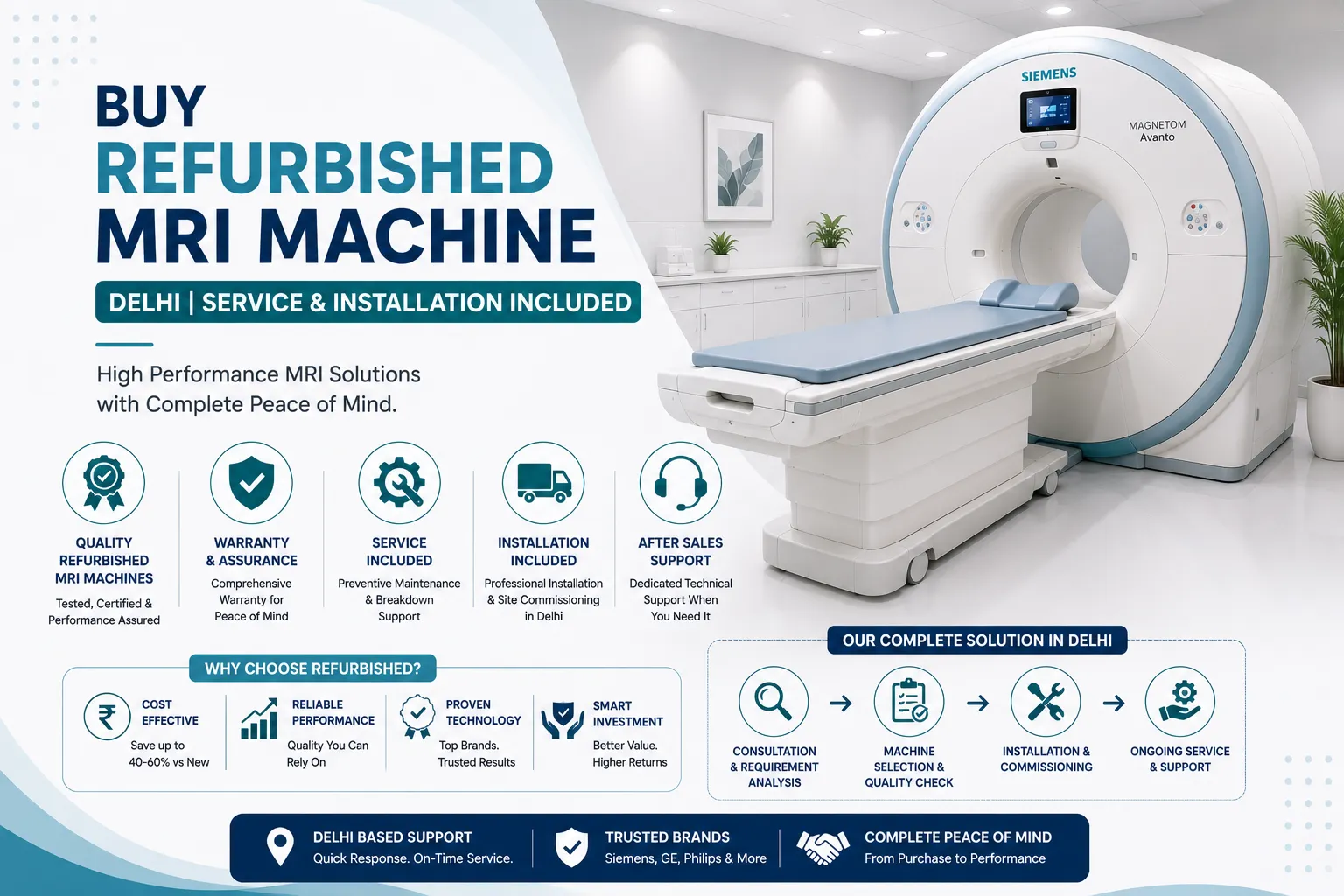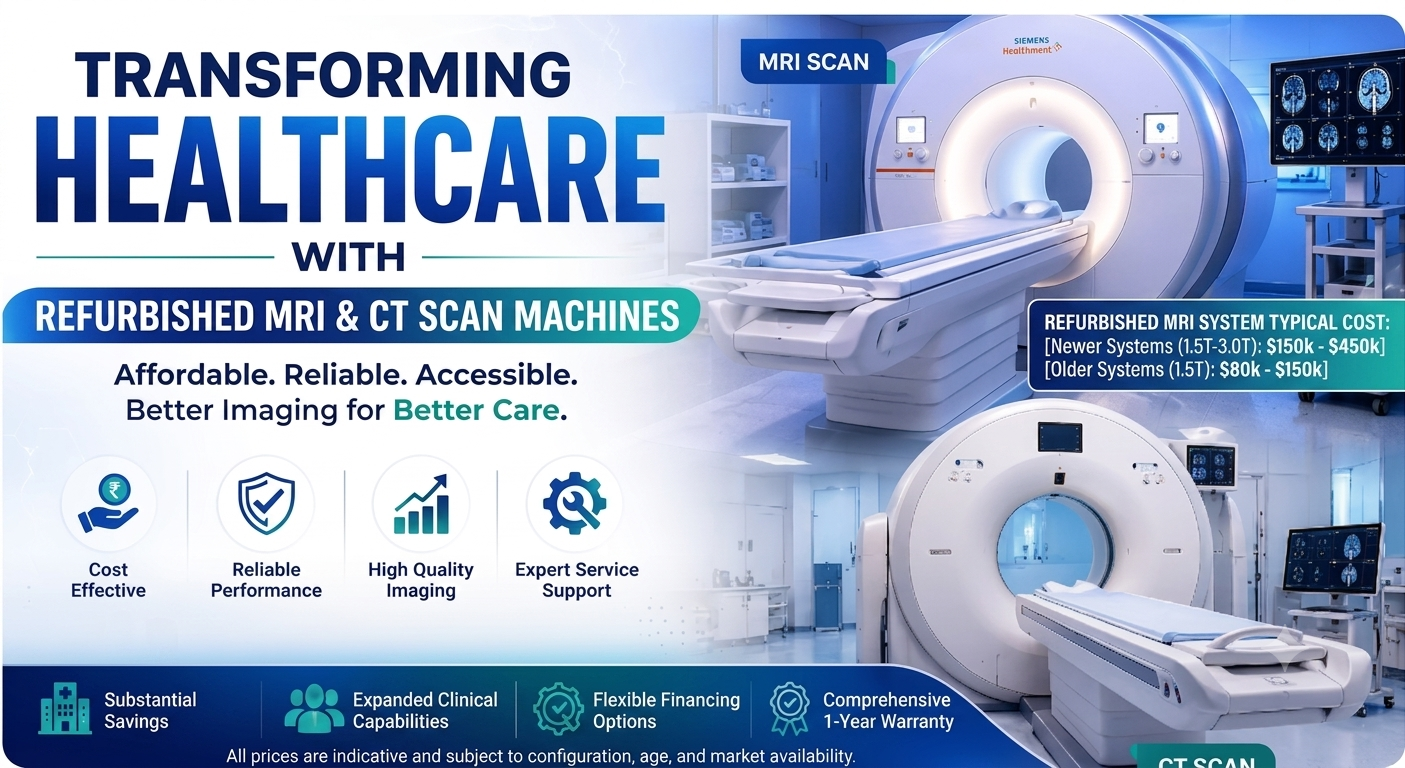
If you've ever asked a vendor "how much does an MRI machine cost" and gotten three different answers on three different calls, you're not alone. It's one of the most googled questions in the medical equipment world, and it's also one of the hardest to answer with a single number. That's not vendors being cagey — it's just how MRI pricing actually works. The cost of an MRI machine depends on the brand, the field strength, whether it's new or refurbished, and a long list of "hidden" costs that show up only after you've already signed the enquiry form.
This post walks through what actually goes into the price, why the gap between new and refurbished systems is so large, and what you should budget for beyond the machine itself.
Why There's No Single "MRI Machine Price"
An MRI machine isn't a commodity product like a hospital bed or an ultrasound probe. It's a highly engineered system built around a superconducting magnet, and every configuration decision — coil type, gradient strength, software package, cooling system — changes the final number. A basic 0.3T open MRI and a high-end 3T superconducting system aren't even in the same conversation when it comes to price, even though both technically produce "an MRI scan."
Broadly, the biggest cost drivers are:
- Brand and manufacturer — Siemens, GE, Philips, and Hitachi all price differently based on reputation, service network, and technology
- New versus refurbished condition
- Field strength — from 0.3T open systems to 1.5T and 3T superconducting magnets
- Coil configuration and bundled imaging software
- Site preparation — RF shielding, flooring reinforcement, room dimensions
- Installation, commissioning, and staff training
- Warranty terms and annual maintenance contract (AMC) coverage
Ask for a quote without specifying most of these, and you'll get a wide range instead of a firm figure. That's actually the honest answer — anyone quoting you one exact price without asking a single question about your facility is skipping steps.
New MRI Machines: What You're Actually Paying For
A brand-new MRI system from a major manufacturer represents the top end of the pricing spectrum, and it's priced that way for a reason. You're paying for the latest generation of magnet technology, the newest software builds, a full manufacturer warranty, and — often — features designed for research-grade or highly specialised imaging that a general diagnostic centre may never fully use.
For a standalone diagnostic centre or a mid-sized hospital opening a new radiology wing, this level of investment is often simply out of reach in the early years. That's precisely the gap that has pushed so many Indian healthcare facilities toward a second, increasingly credible option: refurbished systems.
Refurbished MRI Machines: The Practical Middle Ground
A decade or so ago, "refurbished" medical equipment carried a bit of a stigma — the assumption being that you were buying someone else's problem at a discount. That reputation doesn't really hold up anymore, at least not with reputable suppliers. A genuine refurbishment process today involves full disassembly, component-level testing, magnet inspection, phantom imaging verification, and signal-to-noise ratio checks before a machine is cleared for clinical use again.
Take Siemens systems as an example, since they come up constantly in these conversations thanks to the brand's strong track record for image consistency and long-term reliability across Indian hospitals. Arnica HealthTech's page on refurbished Siemens MRI machines walks through exactly what that inspection and testing pipeline looks like — right down to gradient coil rebuilds benchmarked against original manufacturer specifications. It's a useful read if you want to understand what separates a properly refurbished machine from a quick repaint-and-resell job.
The practical upshot is that a well-refurbished 1.5T or 3T system can deliver clinical image quality that holds up to real diagnostic demand, at a fraction of what a brand-new equivalent would cost. For many centres, that difference decides whether an imaging project happens this year or gets shelved for another few years while capital builds up.
Roughly, What Field Strength Costs You
Since exact figures shift by model, condition, and vendor negotiation, it's more useful to think in tiers based on field strength — this is usually the single biggest factor after new-versus-refurbished:
Open and low-field systems (0.2T–0.4T). These suit centres focused on general and orthopedic imaging. They consume less power, need less elaborate site preparation, and sit at the lower end of the cost spectrum — a sensible entry point for smaller or newer diagnostic centres.
Mid-field 1.5T systems. This remains the most widely installed field strength across Indian hospitals and diagnostic chains, and for good reason — it balances image quality, scan speed, and running costs well enough to handle the bulk of routine and specialised scans a general centre will see day to day.
High-field 3T systems. For centres handling complex neurological, oncological, or musculoskeletal cases, 3T systems deliver sharper resolution and faster acquisition. The price climbs accordingly, but so does diagnostic confidence on the harder cases.
If you want to see how these tiers translate into actual price ranges in the Indian market — including where Siemens systems specifically land relative to other brands — Arnica HealthTech's detailed guide on the price of MRI machines in India breaks this down field strength by field strength, with a full price-list-style structure that's worth bookmarking if you're actively comparing options.
The Costs Buyers Consistently Forget to Budget For
This is where a lot of first-time buyers get caught off guard, because the machine itself is rarely the only major expense on the table.
Site readiness. MRI suites need proper magnetic shielding, controlled environmental conditions, and structural support for the sheer weight of the unit. If your building wasn't originally designed around imaging equipment, civil work can add a meaningful chunk to your total spend — sometimes more than buyers expect going in.
Cooling and helium systems. Superconducting magnets, including most Siemens models, rely on liquid helium for cooling. Newer systems with zero helium boil-off technology need far less ongoing replenishment than older-generation magnets, which quietly affects your running costs for years after installation day — not just the upfront number.
Application training. A machine only performs as well as the person operating it. Skipping proper application training to save a bit of money upfront is one of the more common mistakes diagnostic centres make, and it tends to cost more in missed diagnostic value down the line than it ever saved at purchase.
AMC and warranty coverage. Comprehensive versus non-comprehensive annual maintenance contracts change your risk exposure significantly. It's worth understanding exactly what's covered — parts, labour, response time — before you sign anything.
What a Trustworthy Quote Should Actually Look Like
A proper vendor quote shouldn't just hand you one bundled number and call it a day. It should break down into:
- A site assessment, either in person or through detailed documentation
- A separate line-item breakdown of machine, coil, software, and installation costs
- Clear AMC options, spelled out as comprehensive versus non-comprehensive
- Verifiable reference installations you can actually call and check
- Full refurbishment documentation, if you're buying a used Siemens or Hitachi system
Vague, all-in-one pricing conversations tend to create disputes months after installation, once site prep or training charges show up as "extras." An itemised quote protects both sides from that headache.
Financing Makes This More Accessible Than It Used To Be
Not every diagnostic centre has full capital sitting ready, and that's completely normal. Many suppliers — including those working in the refurbished Siemens space — can connect buyers with financial institutions and leasing partners offering EMI-based procurement structures. This single factor has done more to expand MRI access in tier-two Indian cities over the past decade than almost anything else, letting smaller centres bring in equipment that would otherwise have stayed years away on a wish list.
Bringing It Together
There's no honest single answer to "what does an MRI machine cost." What you can control is how well-informed your comparison is: field strength that actually matches your patient volume, a clear-eyed choice between new and refurbished, and a vendor willing to itemise every cost instead of burying half of them in the fine print.
If you're deep in the comparison stage right now, it's worth reading through both the refurbished Siemens MRI page for a look at how proper refurbishment actually works, and the full price breakdown of MRI machines in India for a more granular sense of where your budget will land based on brand and field strength. Between the two, you'll have a much clearer picture than any single quote over the phone is likely to give you.