

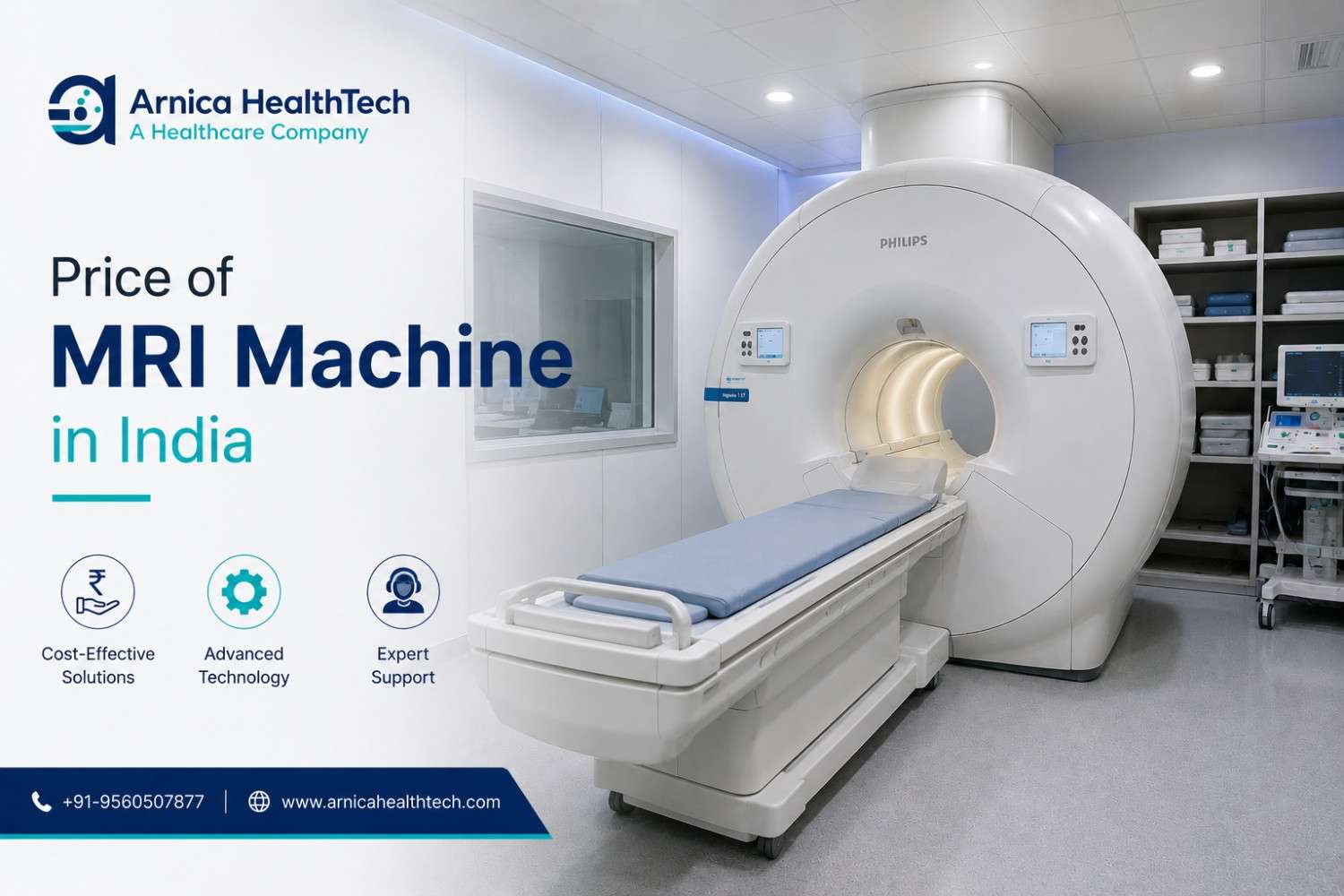
That confusion is understandable. MRI pricing in India is not a single sticker price you can quote over a phone call. It shifts based on brand, field strength, machine condition, and a handful of operational details that most first time buyers never think to ask about.
This guide breaks it all down properly, with specific attention to Siemens systems, since that is where most of the buying questions tend to land.
What Actually Shapes the Price of MRI Machine in India
Here is something most buyers do not realize until they are deep into vendor calls. The mri machine price you see online almost never represents the full cost you will end up paying.
In my experience, the real number comes down to several factors layered together, not just the unit itself.
- Brand and manufacturer, particularly Siemens and Hitachi
- New versus refurbished condition
- Field strength, from 0.3T open systems to 1.5T and 3T superconducting magnets
- Coil configuration and bundled software
- Site preparation, including RF shielding and structural reinforcement
- Installation, commissioning, and training
- Warranty terms and AMC coverage
I have noticed that buyers who compare only the headline mri machine cost across vendors tend to get caught off guard later, once site prep and installation appear as separate charges. A proper quote should bundle all of this transparently from the start.
Siemens MRI Machine Price in India: Why It Gets Asked So Often
Siemens comes up constantly in pricing conversations, and there is a good reason for that. The brand has built a strong reputation across Indian diagnostic centres and hospitals for image consistency and long term reliability.
What Drives Siemens Pricing Specifically
The siemens mri machine price in india varies significantly depending on the model line. A MAGNETOM Essenza, built for ultra short bore imaging and general diagnostic use, sits at a different point than a Verio or Spectra system designed for higher field strength and advanced clinical applications.
Coil count, gradient system specifications, and whether you are buying a new or refurbished unit all shift the equation further. I have walked through facilities comparing an Essenza against an Avanto side by side, and the difference in capability, not just cost, becomes obvious the moment you look at the gradient and coil specs.
Why Siemens Refurbished Systems Are in High Demand
A brand new Siemens system from the manufacturer is simply out of reach for most standalone diagnostic centres in India. That gap is exactly why refurbished Siemens systems have become such a practical entry point.
Arnica HealthTech handles refurbishment of Siemens systems through a process that includes full disassembly, component testing, magnet inspection, and complete recalibration before delivery. I have personally watched engineers rebuild a gradient coil system from the ground up to match original manufacturer benchmarks. It is careful, methodical work, not a quick patch and resell job.
New MRI Machines Versus Refurbished MRI Machines
Let's address the obvious tension here. A new system costs considerably more than a refurbished one, but does that gap actually translate to a meaningful quality difference?
In most cases, not anymore.
How Refurbishment Has Changed
A genuine refurbishment process today is nothing like the rough resale practices from over a decade ago. Refurbished mri machines now go through documented testing, phantom imaging verification, and signal to noise ratio checks before they are cleared for clinical use.
What This Means for Your Buying Decision
Choosing a refurbished route, whether Siemens or Hitachi, can bring your entry cost down dramatically while still delivering imaging performance that holds up to real clinical demand. For a mid sized diagnostic centre working within a defined budget, that difference often decides whether the project happens this year or gets pushed years down the line.
Understanding the MRI Machine Price List by Field Strength
When people ask for an mri machine price list, they are usually asking two separate questions at once: what can I afford, and what does my centre actually need? Those answers rarely match by accident.
Open and Low Field Systems
Hitachi's AIRIS and Aperto lines fall into this category. They suit diagnostic centres focused on general and orthopedic imaging, consume less power, and cost considerably less upfront than higher field systems.
Mid Field 1.5T Systems
This remains the most widely installed field strength in Indian hospitals and diagnostic chains, balancing image quality, scan speed, and operating cost for the bulk of routine and specialized scans a general centre will encounter.
High Field 3T Systems
For centres handling complex neurological, oncological, or musculoskeletal work, 3T systems deliver sharper resolution and faster scans. The mri equipment cost rises accordingly, but so does diagnostic confidence on difficult cases.
The Costs Buyers Forget to Budget For
This is where first time buyers consistently get caught off guard. The machine itself is rarely the only major expense.
Site Readiness
MRI suites need proper magnetic shielding, controlled environmental conditions, and structural support for the unit's weight. If your building was not originally designed around imaging equipment, civil work adds meaningfully to your total spend.
Cooling and Helium Systems
Superconducting magnets, including most Siemens models, rely on liquid helium for cooling. Systems with zero helium boil off technology need far less ongoing replenishment than older generation magnets, which affects your running costs for years beyond installation day.
Application Training
A machine only performs as well as the person operating it. Skipping proper application training to save money upfront is one of the most common mistakes I have seen diagnostic centres make, and it almost always costs more in missed diagnostic value later.
How a Trustworthy Vendor Should Quote You
According to industry observations from medical equipment consultants, transparent itemized quoting has become the standard expectation among hospital procurement teams over recent years, replacing the older practice of bundled, unclear pricing.
A proper quoting process should look like this:
- Site assessment, either in person or through detailed documentation
- Separate breakdown of machine, coil, software, and installation costs
- Clear AMC options, comprehensive versus non comprehensive
- Verifiable reference installations you can actually call and check
- Full refurbishment documentation if you are buying a refurbished Siemens or Hitachi unit
Arnica HealthTech follows precisely this structure for every enquiry, because vague pricing conversations almost always create disputes months after installation, and nobody wants that kind of headache.
Financing Options Worth Knowing About
Not every diagnostic centre has the full capital sitting ready, and that is completely normal. Many vendors, including Arnica HealthTech, can connect buyers with financial institutions and leasing partners offering EMI based procurement structures.
In my experience, this single factor has done more to expand MRI access in tier two cities over the past decade than almost anything else. It lets smaller centres acquire equipment that would otherwise sit years away on a wish list.
A radiology equipment specialist once told me something that stuck with me: "The gap between a well refurbished Siemens system and a new one has narrowed so much that the real conversation now is about budget and support, not quality." That shift explains why refurbished demand keeps climbing across Delhi NCR and smaller cities alike.

