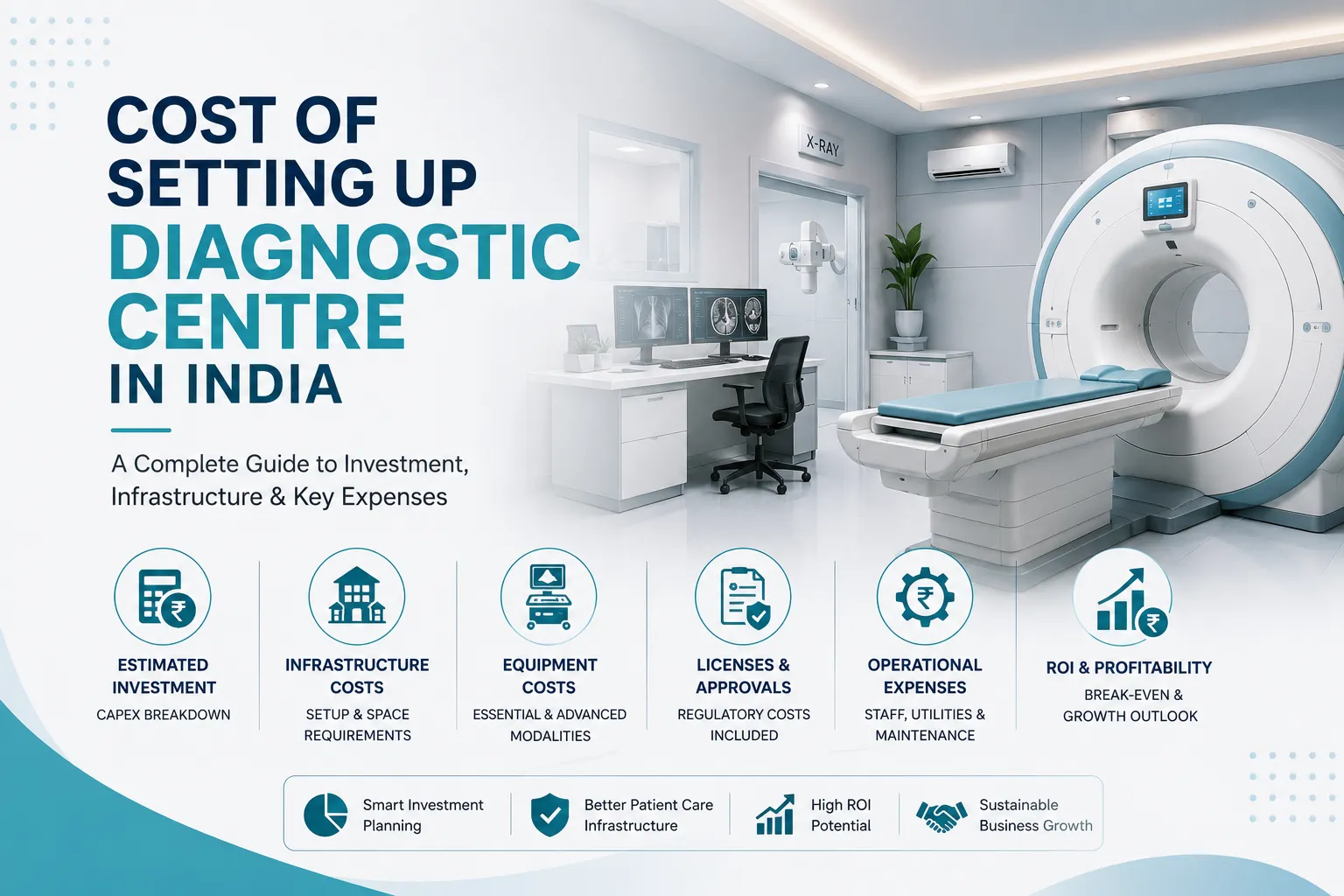
Opening a diagnostic centre in India looks straightforward from the outside. Buy some equipment, rent a space, hire staff, and start scanning patients. Anyone who has actually gone through the process knows it is far more layered than that. Between licensing, equipment procurement, infrastructure, and working capital, the real investment can range anywhere from 50 lakhs for a small pathology and X ray setup to well over 5 crore for a full service imaging centre with MRI and CT.
This guide walks through every major cost head involved in setting up a diagnostic centre in India in 2026, based on how the numbers actually play out for entrepreneurs and hospital groups entering this space.
1. Equipment Cost: The Largest Investment
Diagnostic equipment typically accounts for 50 to 70 percent of total setup cost. This is also where new versus refurbished decisions have the biggest impact on your overall budget.
Pathology and lab equipment: A basic pathology lab with a semi automatic analyzer, centrifuge, microscope, and sample handling setup can be started for 8 to 15 lakhs. A fully automated lab with hematology and biochemistry analyzers pushes this to 30 to 50 lakhs.
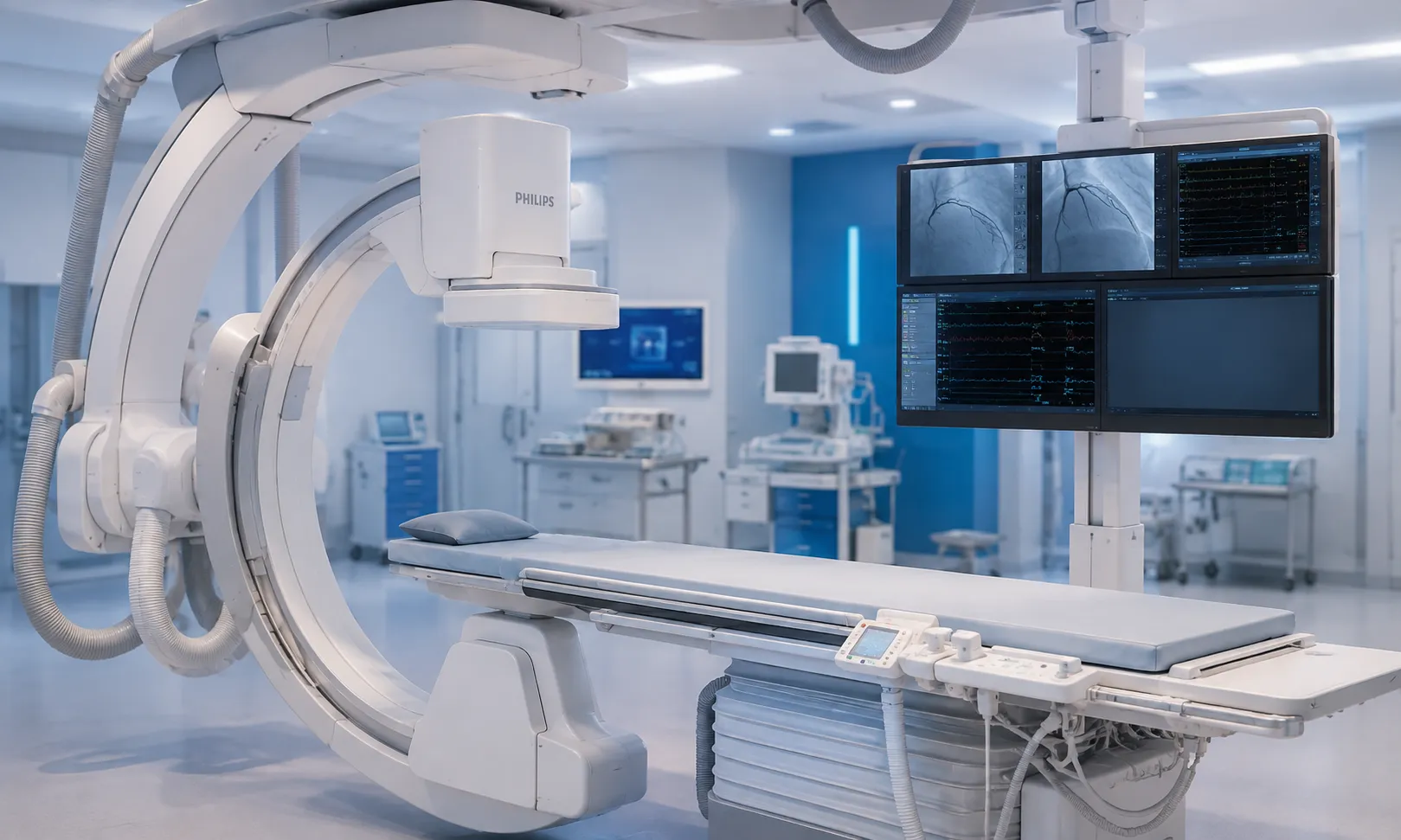
X ray machines: Digital X ray systems range from 12 to 35 lakhs depending on capacity and whether the unit is fixed or portable.
Ultrasound machines: Entry level ultrasound systems start around 8 to 15 lakhs, while high end 4D machines with cardiac and vascular capability can reach 40 lakhs or more.
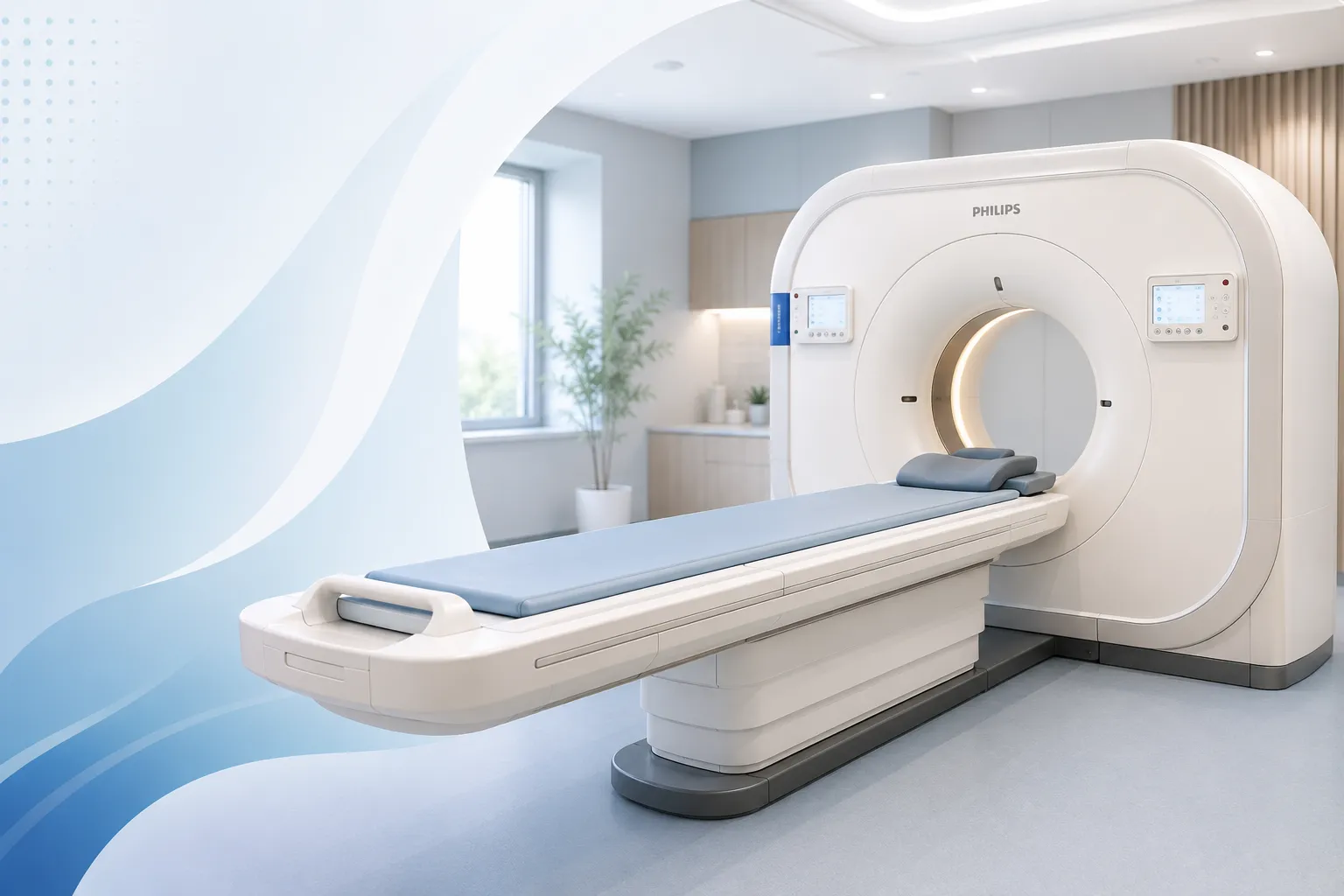
CT scanners: New CT machines range from 60 lakhs for basic 16 slice systems to over 2 crore for advanced 128 slice and above configurations. Refurbished CT scanners bring this down significantly, often by 30 to 50 percent, making them a common choice for centres working within a tighter budget.
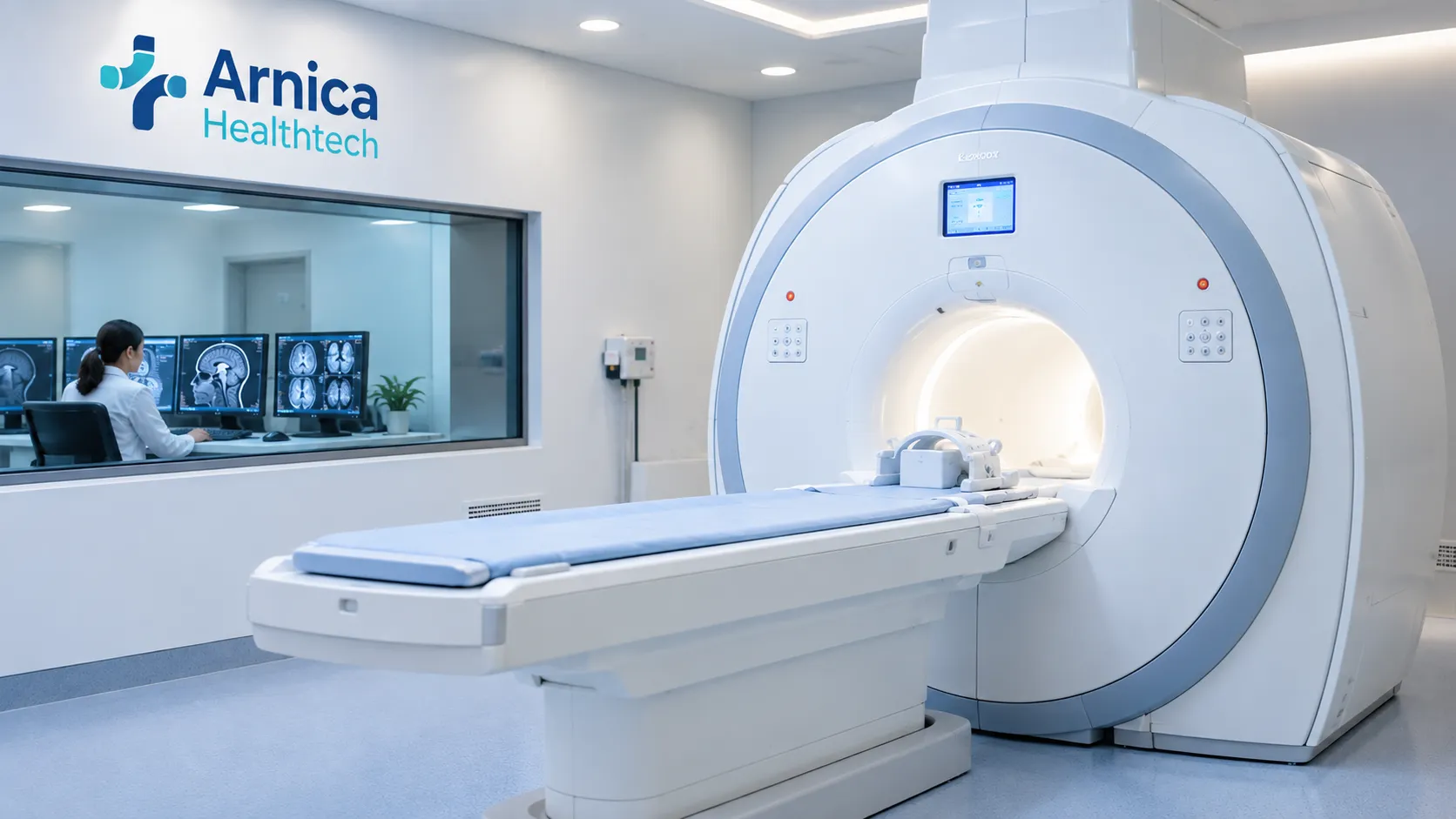
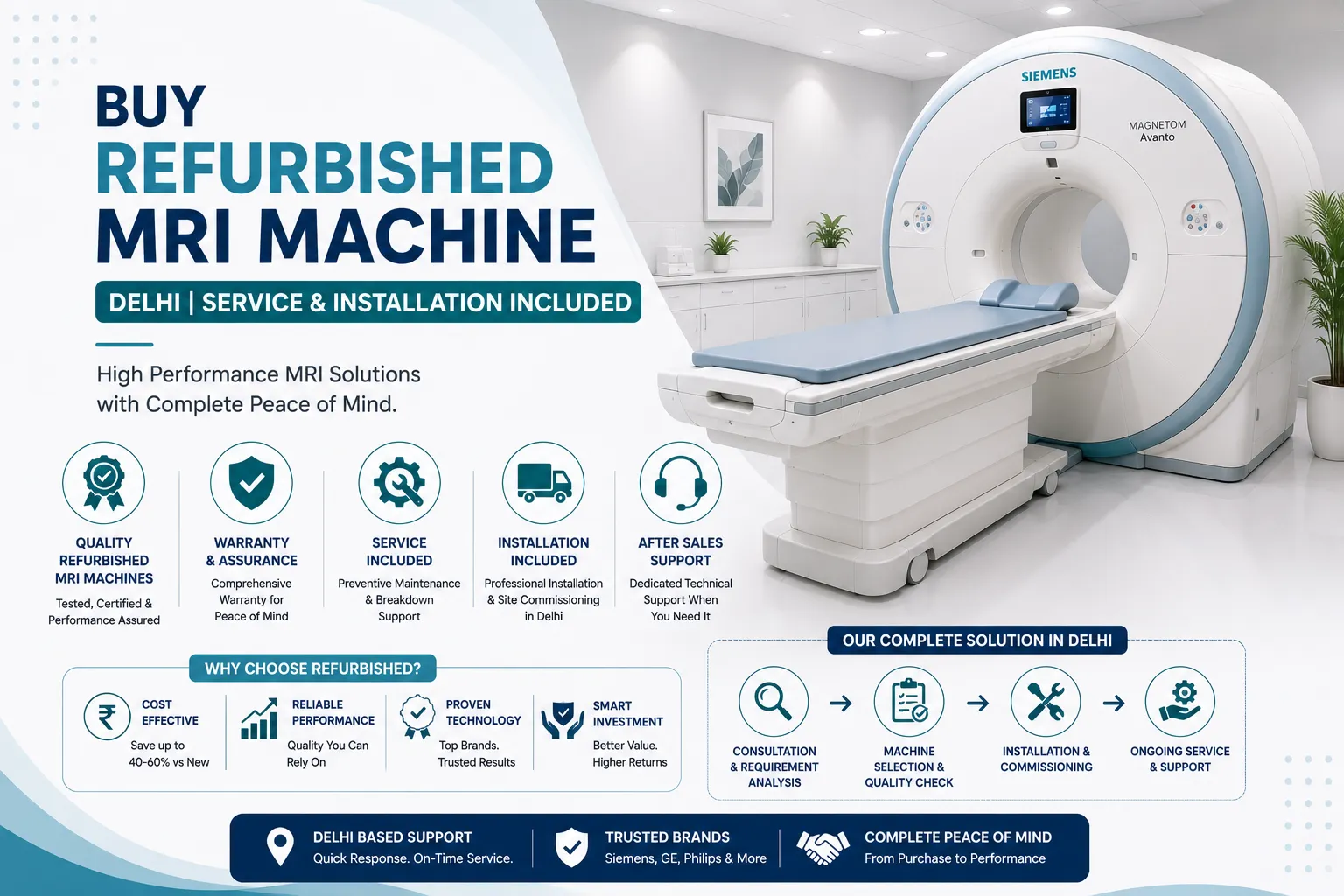
MRI machines: This is usually the single biggest equipment cost in the entire setup. New MRI systems can run from 3 crore to over 8 crore depending on tesla strength and configuration. Refurbished MRI machines, particularly well maintained Siemens units, have become the practical entry point for many centres. A closer look at refurbished Siemens MRI options shows how much capital this route can save without compromising on diagnostic quality. For centres still deciding between models and field strengths, a guide to choosing the best MRI machine is worth reviewing before finalizing a purchase order.
2. Real Estate and Interior Setup
Location and built up area directly shape both your capital cost and your ongoing rent. A diagnostic centre needs specific structural provisions, particularly for MRI and CT rooms, which require radiation shielding, controlled access, and dedicated electrical load.
Space requirement: A basic diagnostic centre with X ray, ultrasound, and pathology needs roughly 1500 to 2500 square feet. Adding CT and MRI pushes this to 4000 to 8000 square feet depending on patient flow design.
Civil work and shielding: Lead lined walls for X ray and CT rooms, along with RF shielded rooms for MRI, typically cost 15 to 40 lakhs depending on room size and shielding specifications.
Interior fit out: Waiting areas, reception, consultation rooms, and patient changing areas generally cost 20 to 50 lakhs for a mid sized centre, depending on finish quality.
Electrical infrastructure: MRI and CT machines require dedicated high capacity power connections and backup generators, adding another 10 to 25 lakhs to the budget.
3. Licensing and Regulatory Compliance
This is the part most first time operators underestimate, and it can quietly derail launch timelines by months if not planned early.
AERB registration: Mandatory for any facility operating X ray or CT equipment, covering radiation safety compliance. Application and compliance costs typically run 1 to 3 lakhs including consultancy support.
PCPNDT registration: Required for ultrasound and any imaging modality capable of prenatal diagnosis, with strict documentation and display requirements under the Act.
Biomedical waste management authorization: Needed for any facility generating clinical waste, usually tied up with a licensed waste disposal vendor on an annual contract basis.
Fire safety NOC and building compliance: State specific fire department clearance, generally costing 1 to 2 lakhs depending on the state and building type.
State clinical establishment registration: Required under the Clinical Establishments Act in applicable states, along with local municipal trade licenses.
GST registration and professional tax: Standard business compliance requirements that apply regardless of scale.
Total licensing costs, including consultancy and processing fees, generally range from 5 to 12 lakhs, though this varies by state and the number of modalities you plan to operate. Many first time operators trip up here simply because they sequence licensing incorrectly relative to equipment procurement and civil work. A rundown of common mistakes in planning a diagnostic centre covers this exact issue in more detail and is worth reading before you finalize your project timeline.
4. Staffing Costs
Staffing is an ongoing operational cost rather than a one time setup expense, but initial hiring and training should be budgeted from day one.
A mid sized diagnostic centre typically needs a radiologist (often on a reporting contract basis rather than full time), radiographers or technologists for each modality, lab technicians, front desk and billing staff, and a facility manager. Monthly staffing costs for a centre running CT, MRI, ultrasound, X ray, and pathology together generally range from 4 to 8 lakhs per month depending on city and staffing model.
Many centres reduce fixed costs by outsourcing radiology reporting to teleradiology networks rather than hiring a full time onsite radiologist, particularly in tier 2 and tier 3 cities where specialist availability is limited.
5. Software, RIS PACS, and AI Integration
Modern diagnostic centres increasingly run on integrated Radiology Information Systems and Picture Archiving and Communication Systems to manage patient records, scan storage, and reporting workflows. Basic RIS PACS setup costs 3 to 10 lakhs depending on scale and cloud versus on premise deployment, with annual licensing fees on top.
AI powered diagnostic tools are also becoming a meaningful part of setup planning, not just an add on. AI assisted reporting for chest X rays, stroke detection on CT, and lesion detection on mammography are increasingly expected by referring doctors and can improve turnaround time significantly. The shift toward AI in medical imaging across Indian diagnostic centres in 2026 is worth understanding early, since building AI compatible infrastructure from the start is far cheaper than retrofitting it later.
6. Working Capital and Marketing
Beyond equipment and infrastructure, most new diagnostic centres underestimate the working capital needed to survive the first six to twelve months before patient volumes stabilize. This should cover staff salaries, consumables, AMC payments, utility bills, and marketing spend during the ramp up period.
A realistic working capital reserve is 15 to 25 lakhs for a small to mid sized centre, and higher for facilities running MRI and CT from day one. Marketing costs, including local doctor referral networks, signage, digital presence, and community outreach, typically require an additional 3 to 8 lakhs in the first year.
Total Cost Summary
Bringing all of this together, here is a realistic range for different centre types in 2026:
Basic pathology and X ray centre: 50 lakhs to 1.2 crore
Diagnostic centre with X ray, ultrasound, and CT: 1.5 crore to 3.5 crore
Full service centre with MRI, CT, ultrasound, X ray, and pathology: 4 crore to 8 crore plus, depending heavily on whether equipment is bought new or refurbished
This is precisely why the new versus refurbished decision on MRI and CT equipment carries so much weight in the overall business case. For many operators, choosing well maintained refurbished imaging systems is not a compromise but a strategic move that frees up capital for staffing, marketing, and working capital in the critical early years. This reasoning is explored in depth in why refurbished MRI and CT scan machines are a smart investment for diagnostic centres, which lays out the financial logic behind this approach.
Conclusion
Setting up a diagnostic centre in India in 2026 is a significant financial undertaking, but the cost structure is predictable once you break it down into equipment, real estate, licensing, staffing, technology, and working capital. The biggest lever for controlling your total investment, without compromising diagnostic quality, is your equipment strategy. Buyers who plan licensing early, budget realistically for working capital, and make informed choices between new and refurbished equipment consistently avoid the cost overruns that derail so many first time diagnostic centre projects.