Healthcare is under pressure from all sides. Patient numbers are rising. Diagnostic demand is growing. At the same time, budgets are tight, especially for mid-size hospitals and diagnostic centers.
Hospitals looking for cost-effective imaging solutions often compare refurbished MRI systems with refurbished CT scan machines based on workload, service support, and diagnostic needs. Both systems play a key role in improving access to medical imaging in developing healthcare regions.
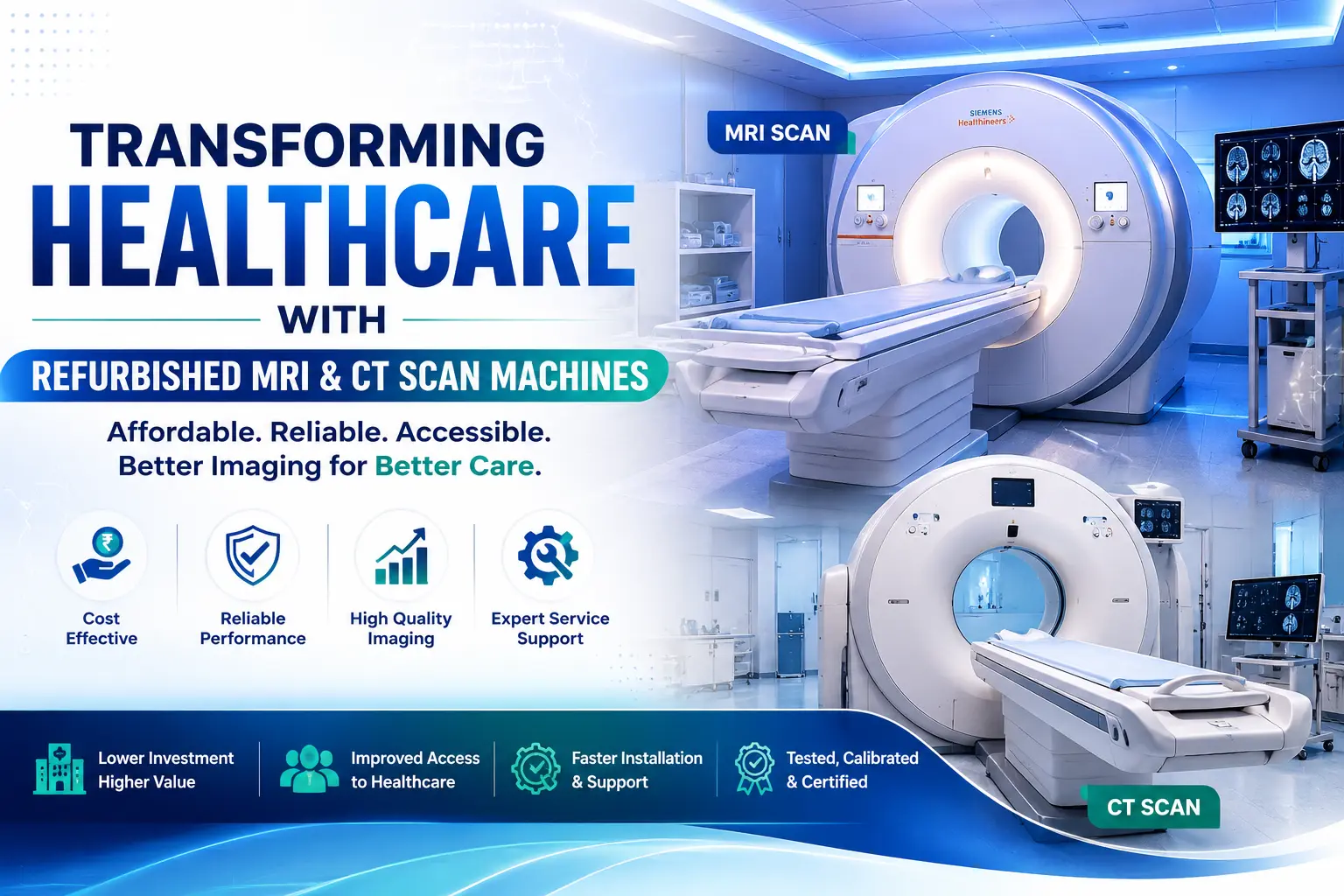
This is where refurbished MRI and CT scan systems are changing how hospitals plan imaging infrastructure. Not as a replacement for new systems. But as a practical option that keeps hospitals running and expands access to diagnostics.
If you talk to radiology technicians, hospital administrators, or even online medical forums, one thing comes up again and again.
“How do we get reliable imaging without spending a huge capital budget?”
Refurbished imaging systems are often part of that answer.
What refurbished MRI and CT systems actually mean in real terms
Refurbished does not mean “used and left as it is.”
A proper refurbished MRI or CT system goes through a structured technical process:
Full system inspection
Replacement of worn or high-risk components
Software reinstall or upgrade
Calibration of imaging performance
Safety testing under load conditions
Image quality validation using standard phantoms
For MRI systems, this includes magnet stability checks, gradient testing, and coil performance verification.
For CT systems, it includes X-ray tube replacement, detector calibration, and dose accuracy checks.
In simple terms, the machine is rebuilt to perform within clinical standards again.
This is why many hospitals now treat refurbished systems as “re-certified diagnostic equipment” rather than old machines.
Why healthcare providers are seriously considering refurbished imaging systems
The decision is rarely emotional. It is operational.
Hospitals choose refurbished MRI and CT systems for three main reasons.
1. Cost pressure is real
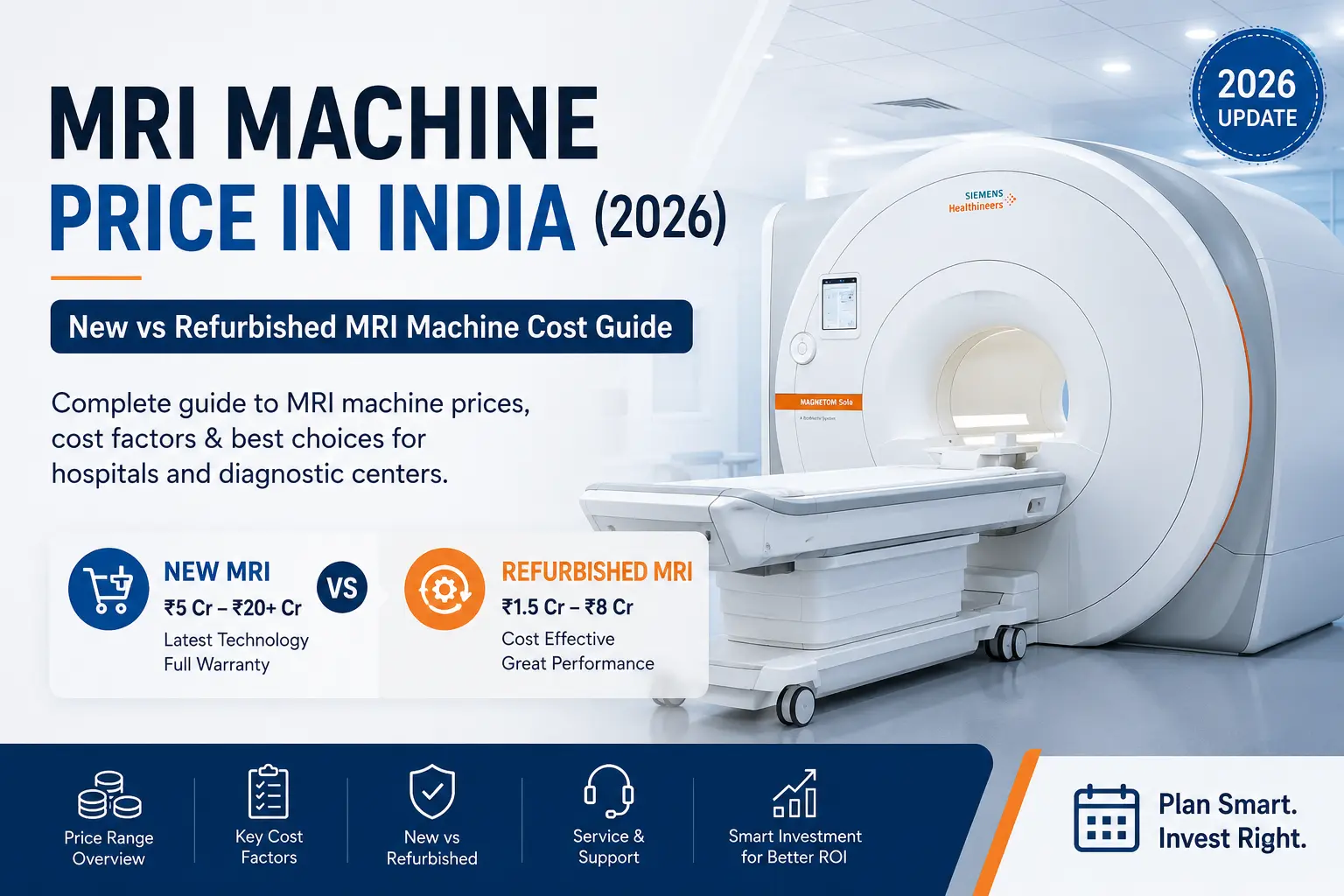
A new MRI system can cost several crores. CT scanners also require high investment plus installation costs.
For many hospitals, especially in tier 2 and tier 3 cities, this blocks expansion.
Refurbished systems reduce entry cost and allow hospitals to start imaging services without heavy financial strain.
2. Faster setup compared to new equipment
New systems often involve long manufacturing and shipping timelines.
Refurbished systems are already available, so installation and commissioning happen faster.
In hospital planning, this matters because delays mean lost patient revenue and delayed service expansion.
3. Expanding diagnostics to underserved areas
A common discussion in healthcare circles is access gap.
People in smaller cities often travel long distances for MRI or CT scans.
Refurbished systems help reduce that gap by making imaging setups more affordable for local hospitals.
What people actually say about refurbished MRI and CT systems
If you look at discussions from radiology communities, biomedical engineers, and hospital admins online, the opinions are mixed but practical.
A few common viewpoints keep appearing.
Concern about reliability
Many ask if refurbished systems can match new machine performance.
The honest answer depends on refurbishment quality. A poorly serviced system creates problems. A properly rebuilt system with testing and calibration can perform consistently in routine diagnostics.
Concern about downtime
Another common worry is maintenance.
Hospitals often ask, “What happens if the machine breaks?”
This is where service support matters more than the machine itself. A strong service network is often the difference between smooth operations and long downtime.
Acceptance in non-critical imaging loads
Many diagnostic centers report that refurbished systems work well for routine scans like:
Brain imaging
Spine MRI
Chest CT
Abdominal scans
High-end research or advanced imaging centers still prefer new systems, but general diagnostic workflows often run well on refurbished machines.
Refurbished MRI systems in clinical use
MRI is sensitive to calibration and hardware stability.
A refurbished MRI system supports a wide range of clinical needs when properly maintained:
Neurology imaging such as brain lesions and stroke detection
Orthopedic imaging for joints and spine
Cardiac structure evaluation
Abdominal soft tissue scanning
Modern refurbished MRI systems often include updated software packages that improve scan speed and image reconstruction.
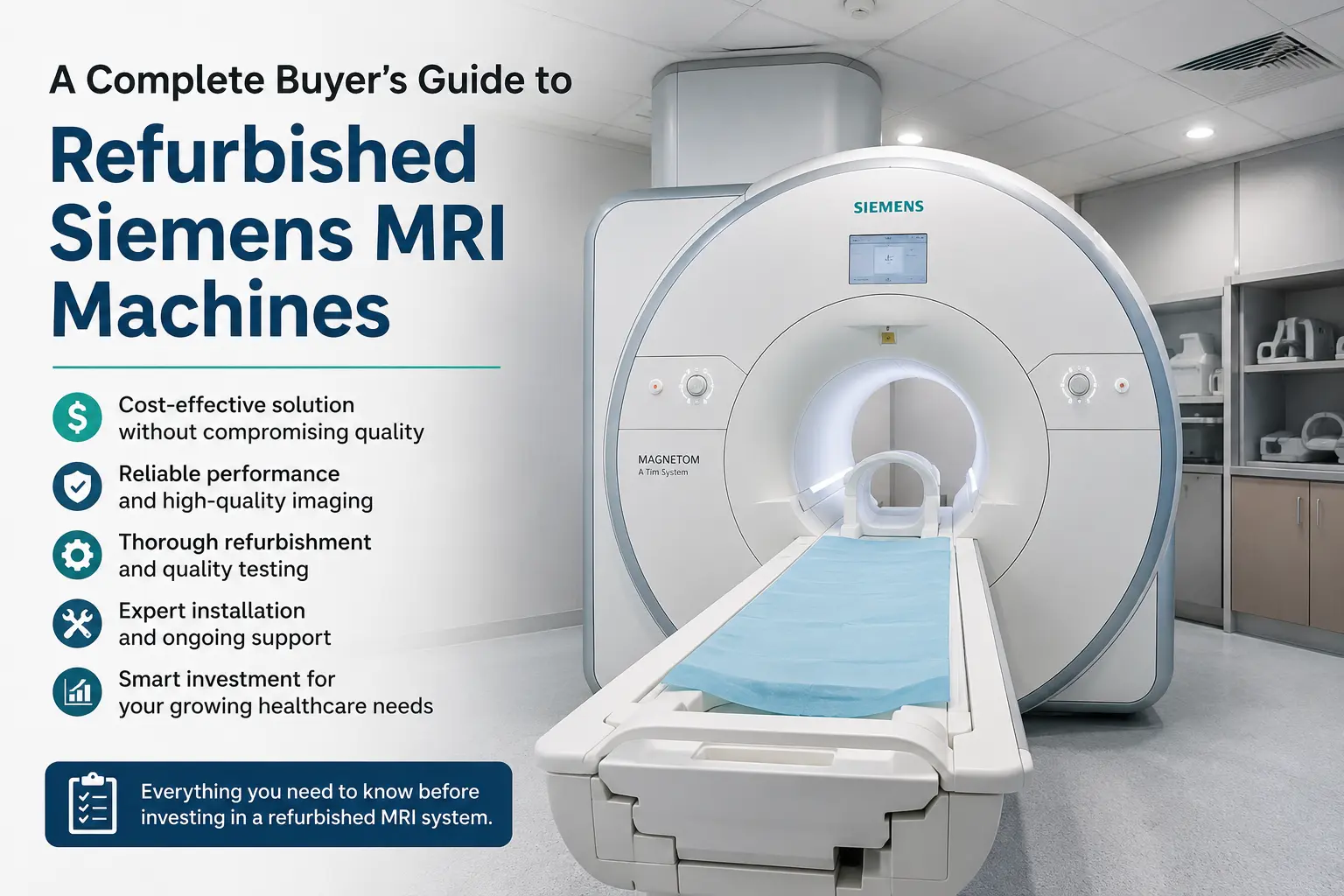
Explore refurbished MRI systems here: refurbished Siemens MRI
Refurbished CT scan systems in hospital workflows
CT scanners are often the backbone of emergency diagnostics.
They are used in trauma care, cancer staging, and lung imaging.
Refurbished CT systems support:
Emergency trauma scanning
Chest and lung evaluation
Brain hemorrhage detection
Abdominal injury assessment
Oncology follow-ups
In many hospitals, CT is the first imaging tool used in emergency cases. Speed and uptime matter more than anything else.
Explore CT systems here: Linac CT scan machine
Image quality concerns and the real truth
One of the most debated topics is image quality.
Some assume refurbished means lower clarity.
In reality, image quality depends on:
Detector calibration
Software reconstruction algorithms
Magnetic field stability in MRI
X-ray tube performance in CT
Regular phantom testing
If these parameters are properly tuned, image output can remain stable and clinically useful.
Where problems usually happen is not in the concept of refurbishment, but in poor execution or weak maintenance.
Integration into modern hospital systems
One advantage that is often overlooked is system compatibility.
Most refurbished MRI and CT machines still support:
DICOM standards
PACS integration
Hospital information systems
Remote reporting workflows
This means radiologists do not need to change their reporting process.
Technicians also adapt quickly because the interface is familiar.
Maintenance reality that hospitals should understand
This is where many discussions online become very practical.
Hospitals often say:
“It is not about buying the machine. It is about keeping it running.”
That is accurate.
A refurbished system needs structured maintenance:
Regular calibration checks
Cooling system monitoring
Software updates
Detector or coil health checks
Preventive part replacement
Hospitals that plan maintenance properly usually get long operational life from refurbished systems.
Choosing the right refurbished imaging partner
Not all refurbished systems are equal.
Hospitals should evaluate:
Testing and certification process
Availability of spare parts
Technical service response time
Installation support
Post-installation maintenance contracts
This is where experienced medical imaging providers become important.
A structured refurbishment process reduces long-term risk and improves system reliability.
Where refurbished imaging fits in modern healthcare strategy
Refurbished MRI and CT systems are not replacing new equipment.
Instead, they are filling a practical gap:
Expanding imaging access
Reducing financial pressure
Supporting fast hospital setup
Improving diagnostic reach in smaller cities
In real hospital planning, this often becomes a hybrid model.
New machines for high-end centers.
Refurbished systems for expansion and access.
Conclusion
Refurbished MRI and CT scan systems are becoming a serious part of healthcare infrastructure planning.
They are not a shortcut. They are a cost-balanced approach to delivering diagnostic care.
When properly refurbished, calibrated, and maintained, these systems can support everyday clinical workloads with stable performance.
The real shift is not technical. It is practical.
Hospitals are asking one question more often now:
“How do we expand diagnostics without delaying care?”
Refurbished imaging systems are increasingly part of that answer.