

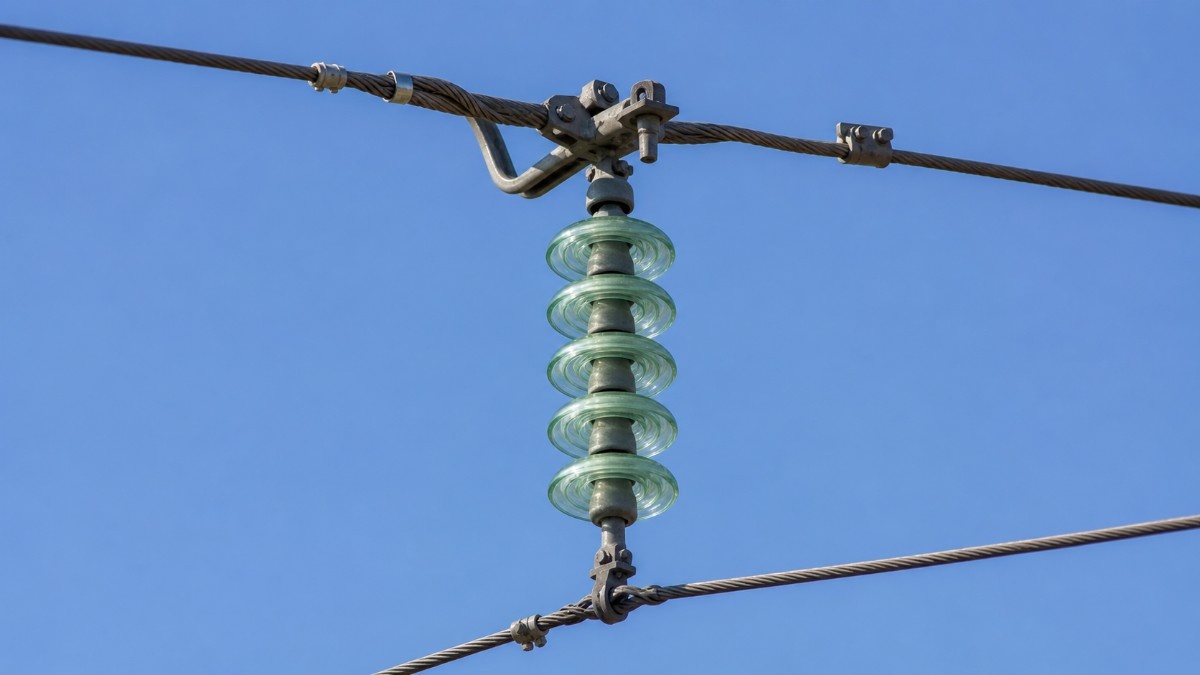
Electricity flows above your head every day through overhead lines. But without proper insulation, that power would never reach you safely. That’s where overhead line insulators come into play.
I’ve worked on distribution projects where a single damaged insulator caused repeated outages in an entire area. It may look like a small component, but its role is huge.
If you want a reliable power system, you need to understand how these insulators work.
What Are Overhead Line Insulators?
Overhead line insulators are devices used to support electrical conductors while preventing current from flowing into poles or towers.
They keep the conductor electrically isolated while holding it firmly in place.
Think of them as the bridge between mechanical support and electrical safety.
Why Overhead Line Insulators Are Important
Without proper insulation, electricity would leak into supporting structures, leading to failures.
In my experience, insulators are one of the most critical components in power distribution.
What Happens Without Them?
- Electrical leakage
- Short circuits
- Power outages
- Equipment damage
Industry reports suggest that a large portion of distribution faults are linked to insulation failures, especially in polluted environments.
Types of Overhead Line Insulators
Different types of insulators are used depending on voltage levels and application.
1. Pin Insulators
Mounted directly on poles.
Best for: Low to medium voltage distribution lines
I’ve seen these widely used in 11kV systems.
2. Suspension Insulators
Made of multiple discs connected in series.
Best for: High voltage transmission lines
They offer flexibility and can handle heavy loads.
3. Shackle Insulators
Compact and versatile.
Best for: Low voltage distribution networks
4. Strain Insulators
Designed to handle tension.
Best for: Dead-end lines and sharp turns
5. Polymer (Composite) Insulators
Modern alternative to traditional materials.
Best for: Polluted or coastal environments
In my experience, polymer insulators perform better in areas with high contamination.
Materials Used in Overhead Line Insulators
The material plays a major role in performance.
Common Materials:
- Porcelain
- Glass
- Polymer (Silicone Rubber)
Porcelain is durable and widely used. Glass allows easy inspection. Polymer offers lightweight and better pollution resistance.
Key Functions of Overhead Line Insulators
Let’s keep it simple.
Main Functions:
- Support conductors mechanically
- Prevent current leakage
- Maintain safe distance between conductor and structure
- Ensure reliable power transmission
I’ve noticed that even small defects in insulators can lead to major disruptions.
Advantages of High-Quality Overhead Line Insulators
Using good-quality insulators makes a big difference.
Benefits:
- Improved reliability
- Reduced maintenance needs
- Better resistance to weather conditions
- Longer service life
When I worked on upgrading a distribution network, replacing old insulators reduced faults significantly.
Factors Affecting Insulator Performance
Not all insulators perform equally in every environment.
Key Factors:
- Voltage level
- Weather conditions
- Pollution and dust levels
- Mechanical load
- Humidity and altitude
For example, coastal areas require insulators with higher resistance to salt deposits.
Common Problems in Overhead Line Insulators
Even high-quality insulators can face issues over time.
Common Issues:
- Flashover due to contamination
- Cracks and mechanical damage
- Aging and material degradation
In my experience, contamination is one of the most common causes of failure.
Maintenance Tips That Actually Work
Regular maintenance keeps insulators performing well.
Simple Checklist:
- Inspect for cracks or damage
- Clean dirt and pollution buildup
- Check fittings and connections
- Monitor leakage current
I’ve noticed that routine maintenance reduces unexpected outages.
How to Choose the Right Overhead Line Insulators
Choosing the right insulator is essential for system reliability.
Consider These Factors:
- Voltage rating
- Environmental conditions
- Mechanical strength
- Material type
- Installation location
Making the wrong choice can lead to frequent failures.
Why Quality Matters
Not all insulators are built the same.
Low-quality insulators can result in:
- Frequent power interruptions
- Increased maintenance
- Safety risks
That is why selecting a trusted manufacturer is important.
Why SPKN India Is a Trusted Name
When it comes to reliable overhead line insulators, SPKN India offers high-quality solutions designed for Indian conditions.
- Durable and tested products
- Suitable for various voltage levels
- Designed for long-term performance
From what I’ve seen, using products from SPKN India improves system reliability and reduces failures.
Real-World Example
I once worked on a rural electrification project where insulators were failing frequently due to dust and pollution.
After switching to better-quality composite insulators, the fault rate dropped significantly.
That upgrade improved power supply consistency.
Expert Insight
According to electrical industry experts, proper insulator selection and maintenance can reduce distribution faults by up to 50%.
That shows how critical they are in power systems.
Future of Overhead Line Insulators
Technology is evolving rapidly.
Modern insulators now offer:
- Better material strength
- Improved pollution resistance
- Longer service life
The demand for advanced overhead line insulators will continue to grow with expanding power networks.
Final Thoughts
Overhead line insulators may not get much attention, but they are essential for safe and reliable power delivery.
From my experience, investing in high-quality insulators is one of the smartest decisions you can make in any electrical project.
They keep electricity flowing safely, and that makes all the difference.
