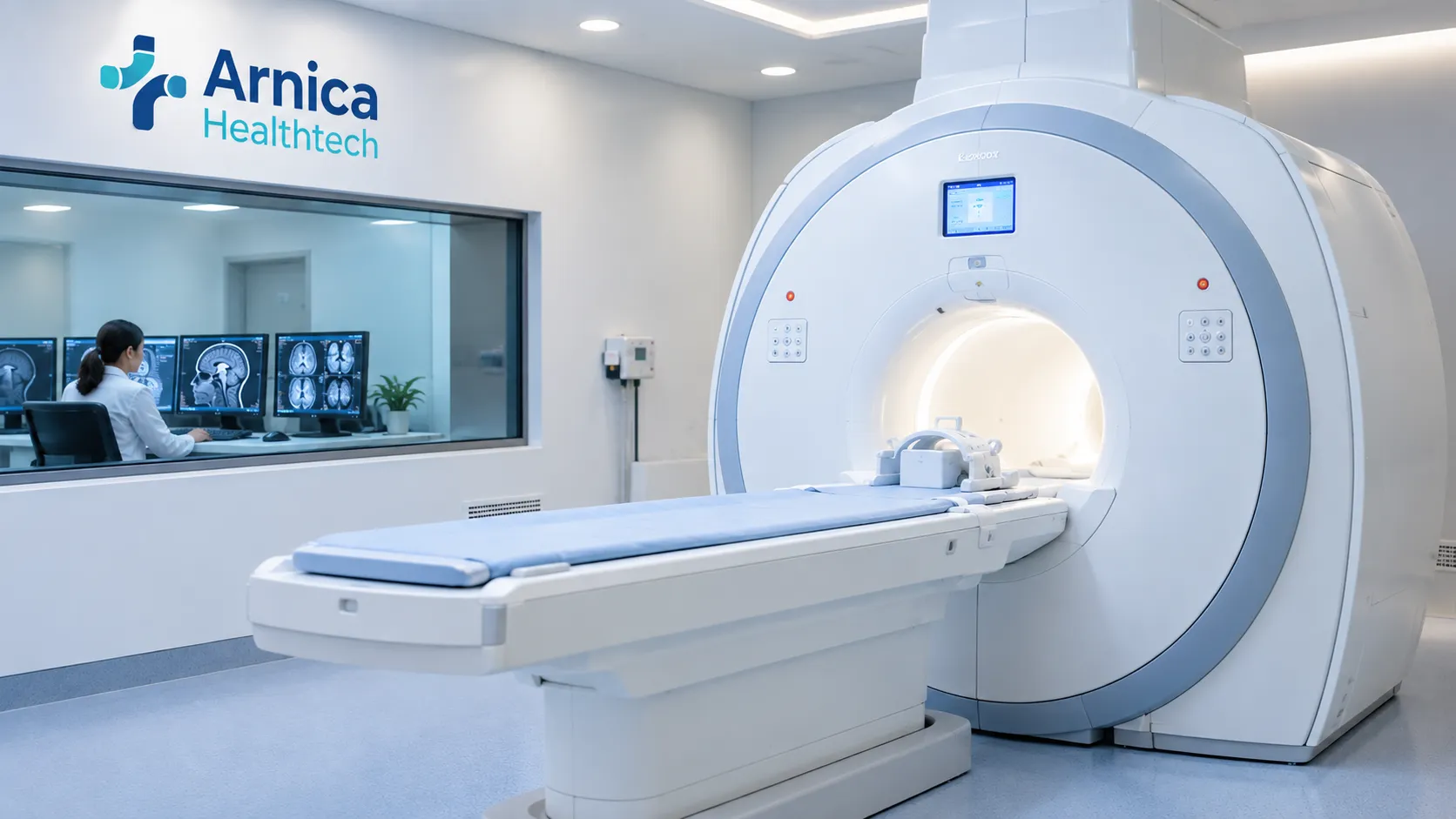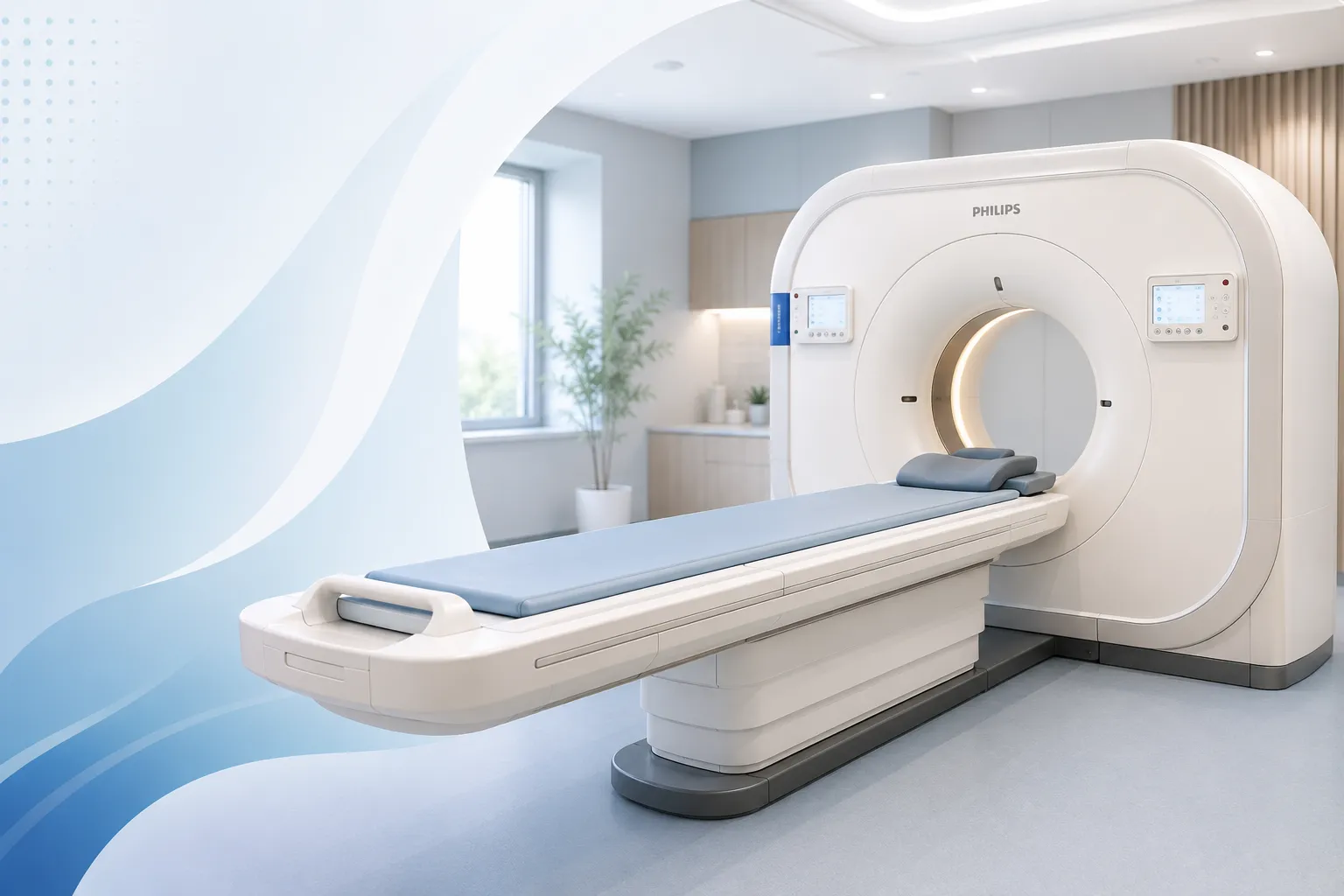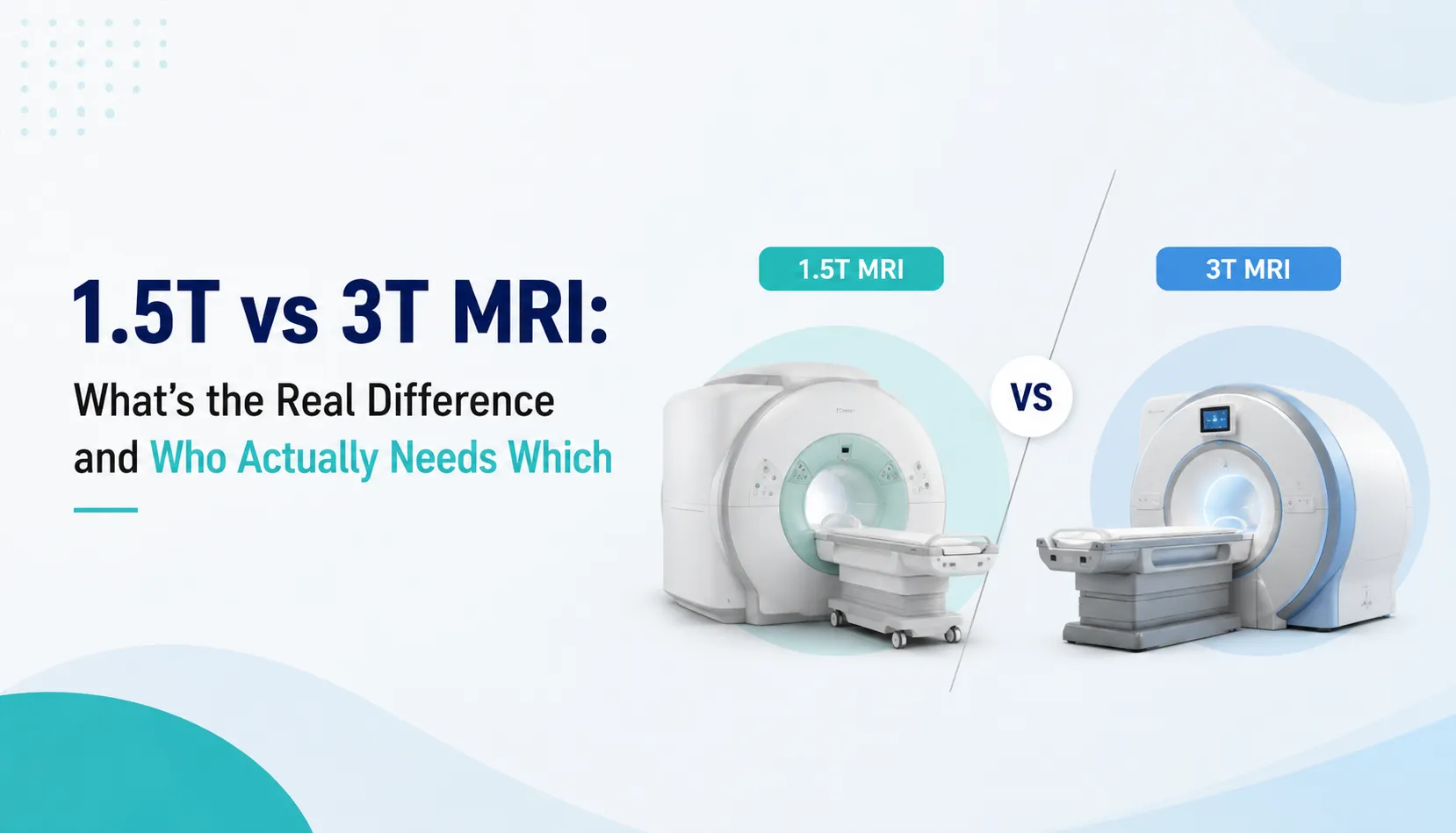
If you have spent any time around a radiology department, you have probably heard someone say "we need a 3T" like it automatically solves every diagnostic problem. It doesn't. And on the flip side, plenty of people still write off 1.5T machines as outdated, which is also wrong. Both magnets are doing serious clinical work every single day across India, and the right choice depends on what you are scanning, who your patients are, and what your budget and facility can actually support.
Let's break this down the way an engineer or applications specialist would explain it to a new radiologist, not the way a brochure would.
What "Tesla" Actually Means
Tesla is the unit of magnetic field strength. A 1.5T magnet produces a field that's 1.5 times stronger than 1 Tesla, and a 3T magnet doubles that. In MRI, a stronger field means more signal coming back from the hydrogen protons in the body, which the scanner converts into image data.
More signal sounds like it should always be better, and in a lab setting it is. But in a real hospital with real patients, that extra signal comes with trade offs in noise, artifacts, and cost that you need to manage properly. This is why the "just buy the biggest magnet" approach often backfires for smaller centers.
Image Quality: Where 3T Genuinely Wins
There's no getting around it, 3T produces a better signal to noise ratio (SNR), and that translates into sharper images, thinner slices, and better contrast resolution. For certain applications this isn't a small improvement, it's the difference between catching something and missing it.
Neuroimaging is the clearest example. Small white matter lesions, subtle changes in early dementia workups, functional MRI, and MR spectroscopy all benefit enormously from the higher field. Musculoskeletal imaging of small joints like wrists and ankles also gets noticeably crisper on 3T because you can push resolution without the image turning grainy. Prostate MRI is another area where 3T has become close to the expected standard in many centers because of how it improves lesion characterization.
We've gone deeper into exactly why 3T pulls ahead for these use cases in this breakdown of 3T MRI precision, if you want the technical side of contrast mechanisms and SNR gains.
Where 1.5T Holds Its Ground
Here's the part that often gets left out of the conversation. Higher field strength also means more susceptibility artifacts. Anything metal in the body, surgical clips, dental work, orthopedic hardware, gets distorted more badly at 3T. If your patient population includes a lot of post surgical cases or older patients with joint replacements, 1.5T is often the more forgiving, more diagnostic choice, not the compromise choice.
Body imaging is another area where 1.5T holds up well. Abdominal and pelvic scans deal with a lot of motion from breathing and bowel movement, and the increased field inhomogeneity at 3T can actually work against you here unless your technologist is very experienced with the sequence protocols. A well maintained 1.5T system, run by a skilled tech, will often produce a cleaner abdominal scan than a poorly optimized 3T one.
Patient comfort matters too. 3T bores tend to run louder because of the stronger gradient performance needed, and some patients feel more warmth (SAR related heating) during longer sequences. For claustrophobic patients, elderly patients, or pediatric cases, a wide bore 1.5T system is often the more practical, better tolerated option.
The Cost Reality Nobody Skips Around
This is where the decision usually actually gets made, and it's not always about image quality at all.
A 3T machine costs significantly more upfront than a 1.5T unit, and that gap doesn't stop at the purchase price. Siting requirements are stricter, you typically need a bigger RF shielded room, stronger cooling infrastructure, and in many cases a dedicated power supply upgrade. Helium quench protocols and annual service contracts also run higher on 3T systems because of the added gradient and coil complexity.
If you're comparing actual numbers for the Indian market, it helps to look at real pricing rather than ballpark figures. We keep updated pricing pages for both, you can check current 1.5T MRI machine prices in India and 3T MRI machine prices in India to get a realistic sense of what each investment actually looks like before you start budgeting.
There's also the new versus refurbished question, which changes the math completely depending on your city, patient volume, and how fast you need to break even. A refurbished 1.5T can be a very smart entry point for a diagnostic center that's still building its patient base, while a hospital doing high end neuro and oncology work might justify a new 3T from day one. We've laid out that comparison in detail in this guide on new vs refurbished MRI pricing for 2026, worth a read before you sign anything.
So Who Actually Needs 3T?
Based on what we see across installations, 3T makes real sense for:
Tertiary care hospitals and academic centers doing complex neurology, oncology staging, and research work. Dedicated neuro or musculoskeletal specialty centers where lesion detection at the millimeter level actually changes patient management. Prostate imaging centers doing a high volume of MP-MRI for biopsy planning. Facilities that can support the higher running cost through patient volume and higher reimbursement procedures.
If your case mix leans heavily toward these areas and your patient volume can support the running costs, 3T pays for itself in diagnostic value and referral reputation.
And Who's Better Off With 1.5T?
1.5T is still the right call for the large majority of diagnostic centers in India, and honestly, most of the world. It makes sense for:
General diagnostic centers doing a broad mix of neuro, spine, MSK, and abdominal cases without a heavy skew toward research grade neuroimaging. Facilities with patients who commonly have orthopedic implants or surgical hardware. Centers working with tighter capital budgets where a strong, reliable, well protocoled 1.5T system delivers excellent diagnostic quality without the added infrastructure burden. Smaller towns and tier 2/tier 3 cities where a lower cost per scan makes MRI accessible to more patients in the first place.
A well run 1.5T center with good technologists and solid protocols will outperform a poorly run 3T center every single time. Field strength is one input into image quality, not the whole story. Coil technology, gradient performance, sequence optimization, and technologist skill matter just as much, sometimes more.
The Honest Bottom Line
There's no universal winner here. 3T gives you higher resolution and better contrast for specific advanced applications, but it costs more to buy, install, and run, and it's less forgiving with metal artifacts and patient comfort. 1.5T remains a genuinely excellent, dependable workhorse for the vast majority of everyday clinical imaging, at a fraction of the total cost of ownership.
Before making a decision, sit down and actually map out your expected case mix for the next three to five years, not just what looks impressive on a brochure. Talk to your radiologists about what they're actually reporting on day to day. Look at your city's patient demographics and referral patterns. And run the real numbers, not just the sticker price, factoring in siting, service contracts, and expected scan volume.
If you want to talk through the specifics for your facility, whether that's comparing new versus refurbished options or working out what siting and infrastructure a 1.5T or 3T install would actually need at your location, that's a conversation worth having with your equipment partner before you commit to either magnet.