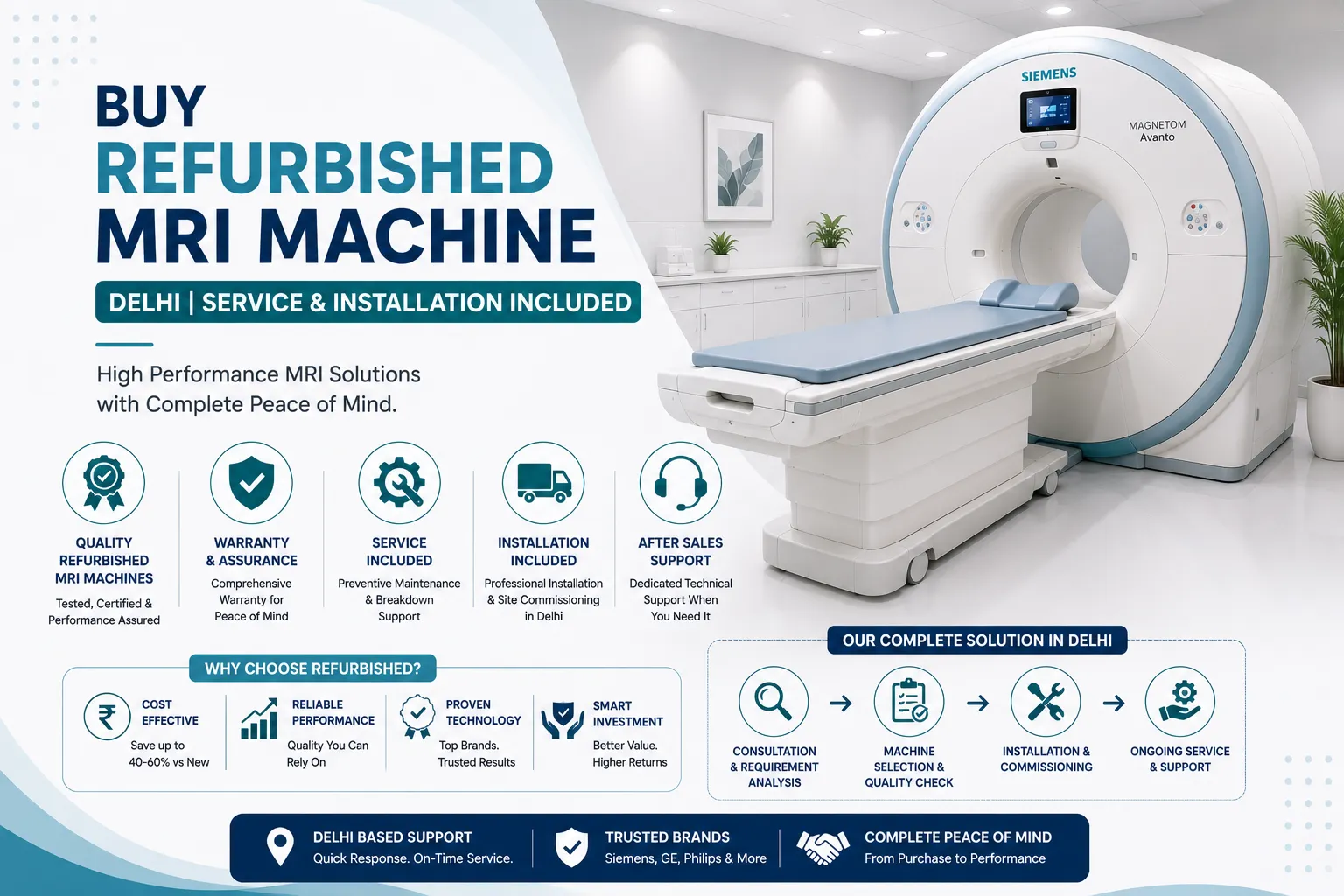
We get this question a lot, usually from someone who's already been burned once. They bought a "refurbished" machine from a dealer, it broke down within a few months, there was no warranty, no service support, and now they're understandably suspicious of the whole category. What actually happened in most of these cases is that they bought second hand equipment that got called refurbished for marketing purposes. The two terms get used interchangeably in casual conversation, but in the equipment business they mean very different things, and that difference decides whether your purchase is a smart investment or an expensive mistake.
Let's clear this up properly.
Second Hand Means "As Is"
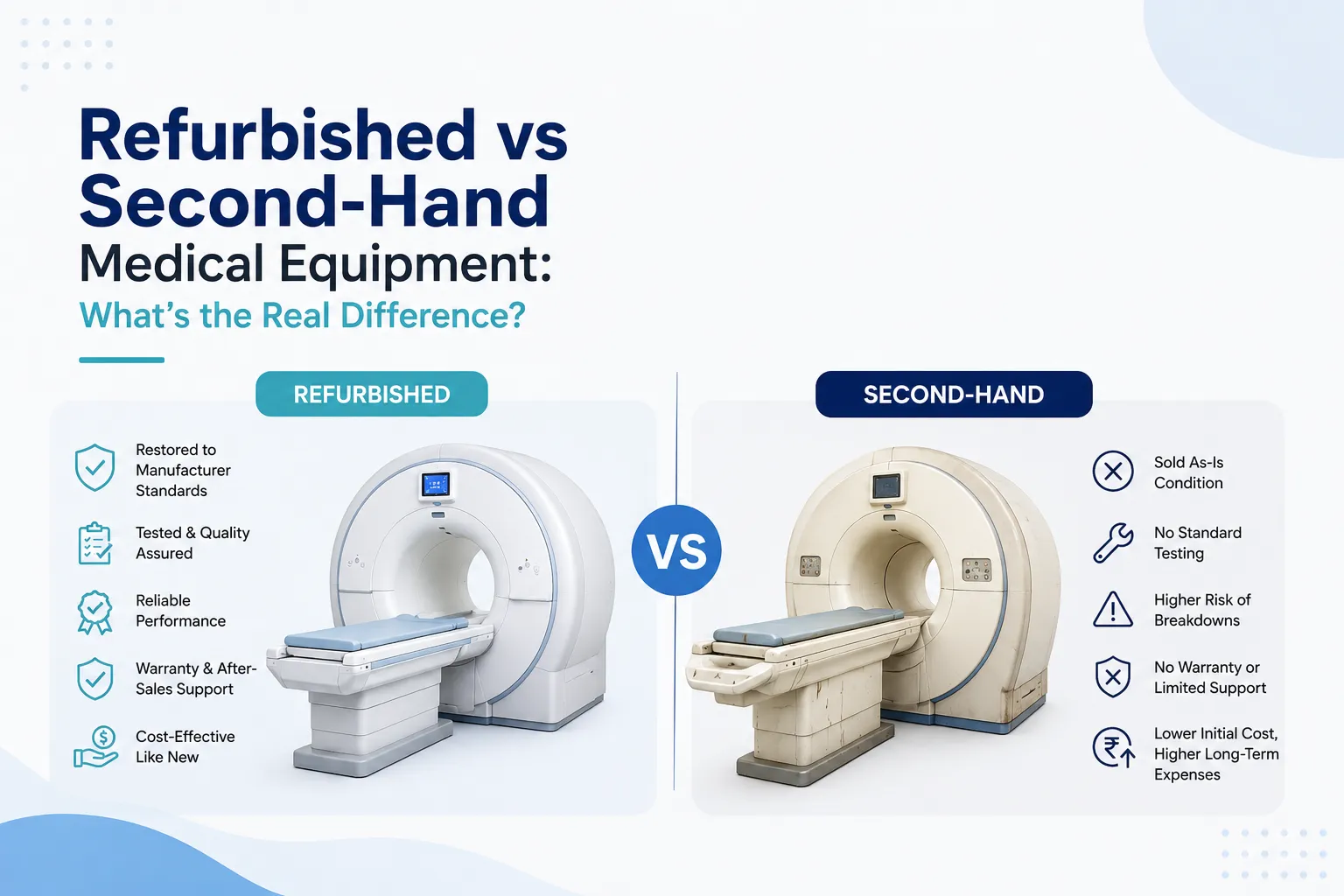
Second hand equipment is exactly what it sounds like. It's a used machine that changes hands from one owner to another, usually with little to no work done on it beyond maybe a basic cleaning. The seller isn't obligated to test every component, replace worn parts, update the software, or verify that the coils and gradients are performing within spec. You're buying it in whatever condition it happens to be in on the day of sale.
This isn't automatically a bad thing. If you know exactly what you're doing, have your own engineering team, and you're getting a steep discount that accounts for the risk, second hand can work out fine. But for most diagnostic centers, that's a big gamble. You don't know the real service history, you don't know if the previous owner ran it hard without proper maintenance, and you're taking on all of that uncertainty yourself the moment you sign.
Refurbished Means Someone Actually Did the Work
Refurbished equipment goes through an actual process before it reaches you. A proper refurbishment involves stripping the machine down, testing individual components, replacing parts that are worn or near end of life, updating software and calibration, and running the system through full diagnostic checks to confirm it performs at or close to original specification. Reputable refurbishers also provide documentation of what was tested, what was replaced, and what condition the machine left their facility in.
This is the difference that actually matters for a diagnostic center. You're not just buying a used machine, you're buying a used machine that's been brought back to a known, verified, working standard, with someone standing behind that work. We've written before about why this distinction changes the entire buying decision in why choose a refurbished mri machine, and it's worth reading if you want the full breakdown of what proper refurbishment actually involves.
The Warranty Question Tells You Everything
Here's the fastest way to tell if you're looking at genuinely refurbished equipment or just second hand equipment wearing a nicer label. Ask about the warranty. A properly refurbished machine from a legitimate supplier comes with a warranty period, often somewhere between six months and two years depending on the component and the vendor. That warranty exists because the refurbisher has confidence in the work they did, they tested it, they know what condition it's actually in.
Second hand equipment sold as is typically comes with no warranty at all, or at best a very short, limited one that barely covers you past the delivery truck leaving. If a seller can't or won't offer any warranty, that tells you they haven't done the verification work to back the machine's condition. Walk away or at minimum negotiate the price down hard enough to cover your own risk.
Documentation and Testing Separate the Two Categories
A legitimate refurbishment process leaves a paper trail. You should be able to see records of what testing was performed, what components were replaced, calibration reports, and ideally some form of quality certification from the refurbishing facility. This isn't bureaucratic box checking, it's how you actually know what you're paying for.
We put together a detailed look at what this testing process should actually cover in quality assurance process for refurbished medical scanners, and honestly, if a supplier can't walk you through something similar to what's described there, that's your signal they're selling second hand equipment without doing the refurbishment work that justifies the higher price tag.
Why the Price Difference Exists, and Why It's Worth It
Genuinely refurbished equipment costs more than raw second hand equipment, and that gap isn't arbitrary. You're paying for labor, replacement parts, calibration, testing time, and the warranty backing it all. A refurbisher who's doing this properly has real costs to recover, and that shows up in the price.
But compare that to the alternative. If you buy cheap second hand equipment and it fails within the first year, you're now paying for emergency repairs, possibly replacement parts sourced on short notice at a premium, and lost scanning revenue for every day the machine is down. That "savings" from buying second hand often evaporates fast, and sometimes turns into a bigger loss than if you'd just paid more upfront for a properly refurbished unit with warranty coverage.
For a lot of centers, especially ones still building their patient base, a genuinely refurbished MRI or CT machine hits the sweet spot, real cost savings compared to new equipment, without taking on the raw uncertainty of buying second hand. We've laid out the actual economics of this comparison in refurbished mri machines an economical and high quality alternative, which goes deeper into where the real savings come from without cutting corners on reliability.
How to Tell the Two Apart When You're Actually Shopping
This is where a lot of buyers get tripped up, because the language sellers use isn't always precise. Here's what to actually check before you commit to anything.
Ask for the specific refurbishment process the vendor followed, not just a general claim that the machine was "refurbished." A real answer includes specifics, what was tested, what was replaced, who performed the work.
Ask for documentation. Calibration certificates, test reports, and a clear service history aren't optional extras, they're proof the work was actually done.
Ask about warranty terms in writing before you pay anything. A vague verbal promise of support isn't the same as a documented warranty period with clear terms.
Ask where the machine came from and how long it sat before refurbishment. Equipment that sat unused for a long stretch without proper storage conditions can develop issues that a rushed refurbishment might not catch.
Ask about post sale service and parts availability. A refurbisher with an ongoing relationship to the original manufacturer or a strong parts supply chain is in a much better position to support you years down the line than a one time reseller.
If a seller gets vague or defensive about any of these questions, that's a real signal, not just an inconvenience.
Where This Fits Into Your Bigger Buying Decision
Refurbished versus second hand is really just one layer of the broader new versus used decision every diagnostic center has to make. Once you're clear on the difference between the two, the next question is how a properly refurbished machine stacks up against buying new, in terms of both upfront cost and total cost of ownership over the next five to ten years. We covered the full pricing picture for the Indian market in mri machine price india 2026 new vs refurbished, which is worth going through once you've settled on refurbished as your general direction, since it lays out where the actual savings hold up and where new equipment still makes more sense.
Conclusion
Refurbished and second hand aren't the same thing, even though they get talked about like they are. Second hand is a used machine sold as is, with all the uncertainty that comes with it. Refurbished is a used machine that's been properly tested, repaired, calibrated, and backed with a warranty by someone who's staking their reputation on its condition. The price difference between the two reflects real work, not just marketing spin, and for most diagnostic centers, that difference is exactly what stands between a smart equipment investment and a costly gamble.
Before you buy anything described as refurbished, slow down and ask the specific questions that separate genuine refurbishment from a relabeled second hand sale. It takes an extra conversation or two, but it's a lot cheaper than finding out the hard way six months after installation.